














How It Works
A reset button for the nervous system.
Sensors read your brain's electrical activity. Software identifies the dominant frequencies and the balance between hemispheres and converts them into tones. Your brain responds, naturally.
The whole loop runs in a few milliseconds.
Why people come in. All tied to one nervous system.
See More Conditions ›








The problem
The alert that never stops.
The stress response is built to switch on for a threat and off when it passes. Constantly triggered, it stays on, and the symptoms pile up: poor sleep, scattered focus, a racing heart. Most treatments focus on the pile. This addresses the switch.
Hemispheric balance
Stress has a side.
An imbalance between the brain's hemispheres tracks with how a nervous system holds stress. Left-dominant patterns (parasympathetic) tend toward freezing and numbing. Right-dominant (sympathetic) toward fight-or-flight. The reflection gives the brain a chance to correct it.
Allostasis
Your brain adapts to everything. Including itself.
The brain isn't defending a fixed setpoint. It actively adapts to context, mobilizing for a threat and standing down when it passes. Problems start when it can't make that transition. That capacity to adapt is what makes a feedback loop possible at all.
Autonomic regulation
Your brain controls the entire body. So we start there.
The autonomic nervous system regulates heart rate, blood pressure, breathing, digestion, temperature, sleep, and the stress response. When it can't shift out of high alert, the symptoms show up everywhere at once. Support the regulator (your brain), and the symptoms it drives settle together.
How it works
The technology reads your brain. Then lets your brain hear its own activity.
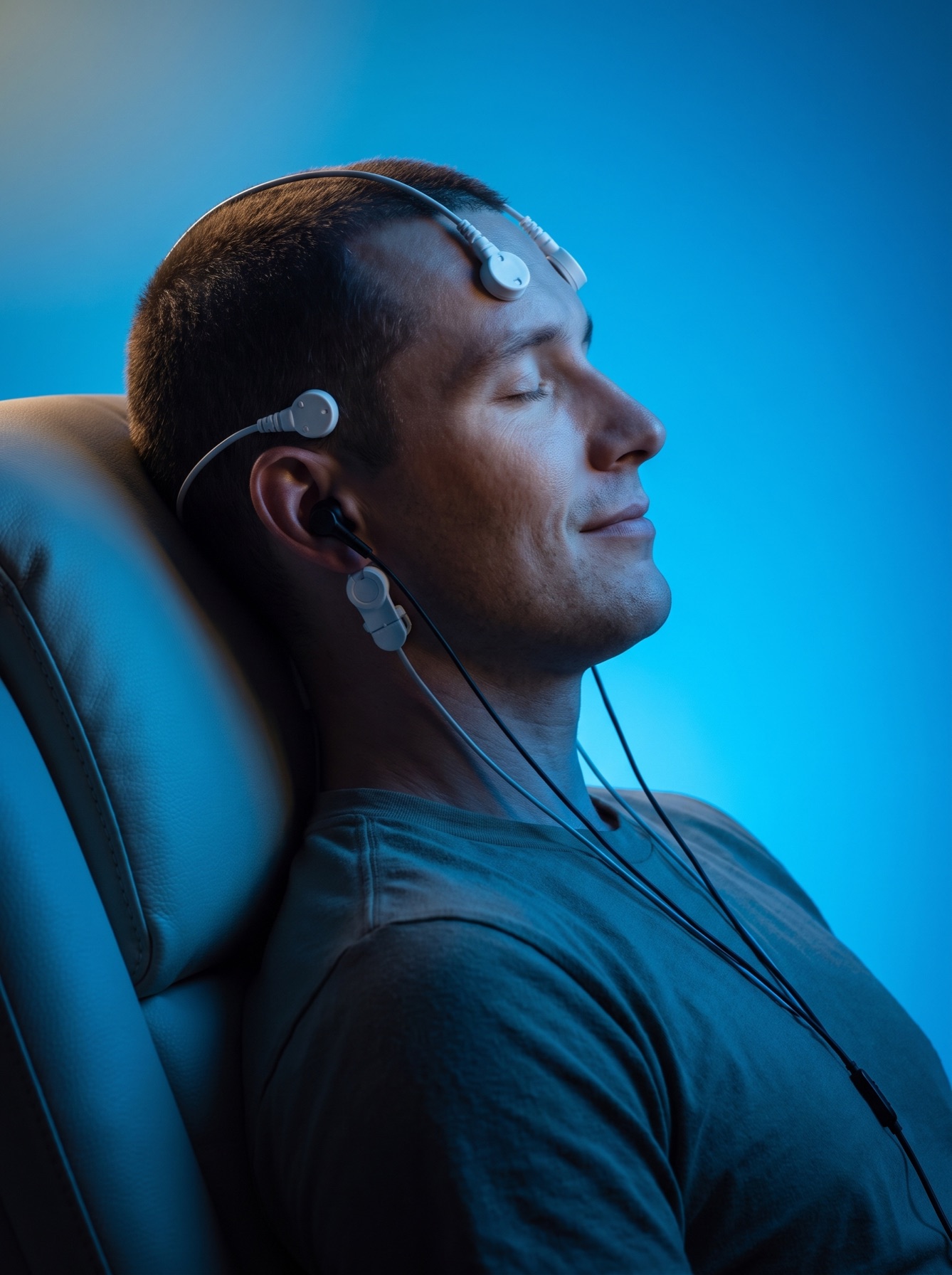
Four sensors, patented software, and a pair of earbuds. Nothing else. Your brain hears an accurate, real-time reflection of its own activity, and adjusts.
Closed-loop feedback
Sense. Reflect. Recalibrate.
Four sensors on the scalp read your brain's electrical activity. Software finds the dominant frequencies and the balance between hemispheres. Those become tones, played back through earbuds in real time. The brain hears itself, and self-adjusts.
Latency
Faster than a blink. By about 70 times.
Sensor to earbud in roughly 4 to 5 milliseconds. A blink takes about 300. That speed is what makes it a reflection and not a recording.
Signal processing
Your EEG, transposed.
The software reads the incoming signal continuously, finds the dominant frequencies and how activity balances across the brain, and converts that into tones the brain can interpret with fidelity.
Open loop vs. closed loop
Open loop technologies play the same tones or music to everyone. This plays you.
A meditation track or a white-noise machine plays the same audio regardless of who's listening. The technology reads your live brain state and responds to it every few milliseconds. The sound is made from you, in the moment. Nobody else's session sounds like yours.
Non-invasive
No electrical stimulation. No pulse. No pill.
Electrical
No electrical stimulation.
0 mA
Magnetic
No magnets.
0 T
Chemical
No pill.
0 mg
Not hypnosis.
You stay fully aware the entire time. Nothing is suggested or induced.
Not white noise.
It reads your actual brain activity. It doesn't play the same thing to everyone.
Not a stimulant or a sedative.
Nothing enters your body. Nothing alters your chemistry.

The session
Five sessions. Not five months.
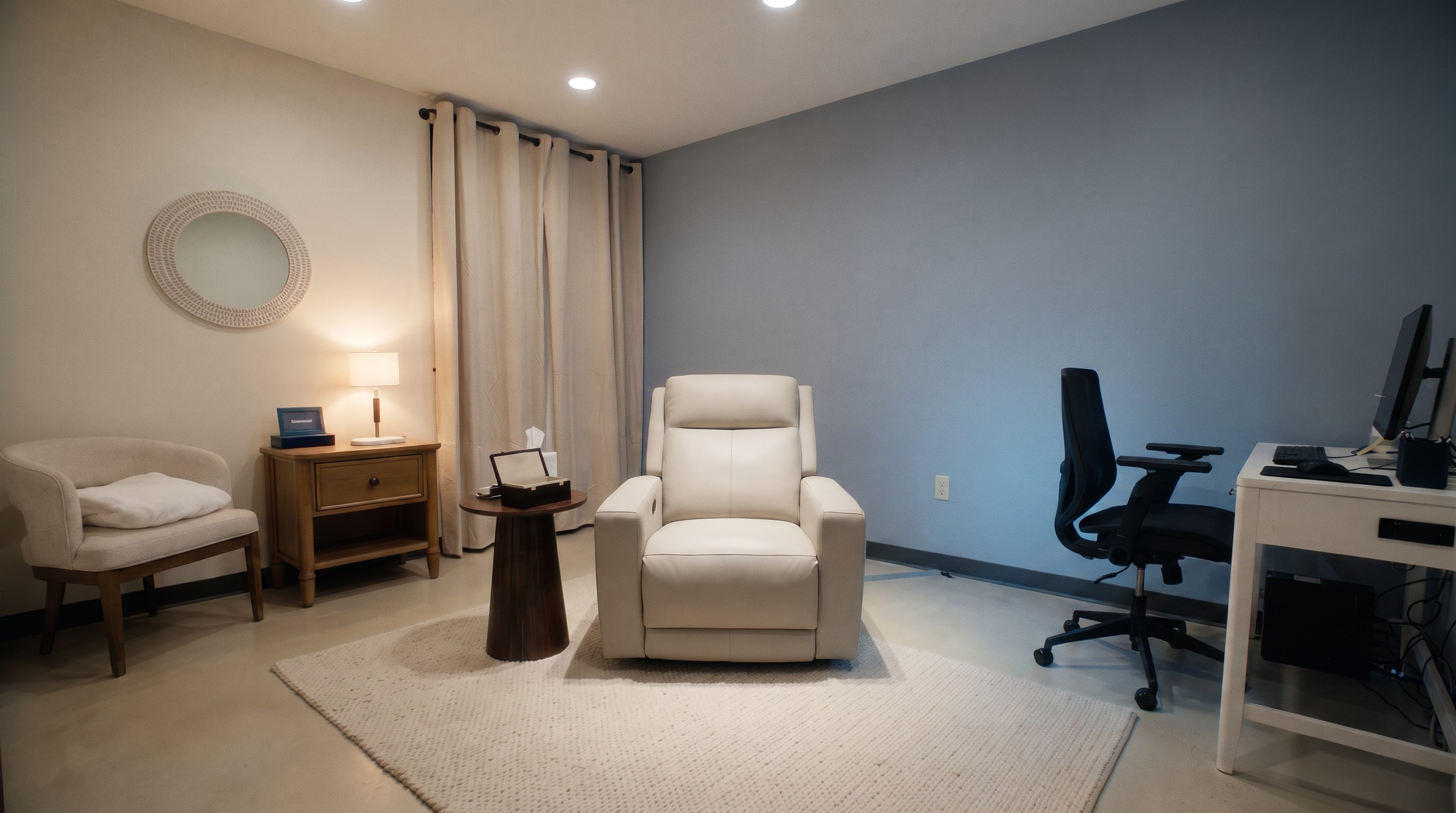
A five-minute assessment, sensors only, no scan, no radiation. Then a short treatment course of five sessions, 40 to 55 minutes each, across about 3 weeks. Reclined and comfortable. Most people rest or sleep.
The course
A short course, then you're done.
Many people notice a change by the second session. Benefits are described in months, not days. Occasional tune-ups are available afterward, not required.
The research
Tested, reevaluated, and enhanced. For over a decade.
This technology wasn't launched and left alone. It has been studied, revised, and studied again for more than fifteen years, across the populations that live with stress professionally: military, first responders, healthcare workers, athletes. Each round of research fed the next.
Moments in Time
The research, one study at a time.
Study completed.
Active duty & retired, after concussion.
Active-duty and retired service members, along with some family members, came in with concussion symptoms that had lasted for years. Each received ten sessions over five weeks. We look forward to sharing results.
- Enrolled
- TBD
- Sessions
- 10, over 5 weeks
- Compared with
- Placebo tones
- Registry
- TBD
Study completed.
Healthcare workers under stress.
Does four sessions in two weeks change anything for people working under constant pressure? Healthcare workers with symptoms of stress were split at random, one group starting immediately and the other waiting its turn. The results were promising, and a year-long follow-up study came next.
- Enrolled
- Up to 166, ages 18+
- Sessions
- 4, over 2 weeks
- Compared with
- A delayed start
- Registry
- NCT04682197
Study completed.
Adults struggling with insomnia.
Adults who had struggled with insomnia signed up for ten sessions in a small pilot, blinded and placebo-controlled. When it ended, everyone in the placebo group was offered the same sessions. The study is complete and on the public record.
- Enrolled
- Up to 24 adults
- Sessions
- 10
- Compared with
- Placebo tones, blinded
- Registry
- NCT03607994

Studies conducted through Wake Forest University School of Medicine. Photos are for illustration only.

Better sleep. A quieter mind. Real relief.
Individual results vary. Most people notice a shift within the first few sessions, but timing and degree differ from person to person.
- Actually falling asleep, and staying asleep.
- A brain that can go quiet at the end of the day instead of running the same loop on repeat.
- Reacting to what's next instead of carrying what came before.
- A return to feeling normal, not just managing.
Find a room near you.
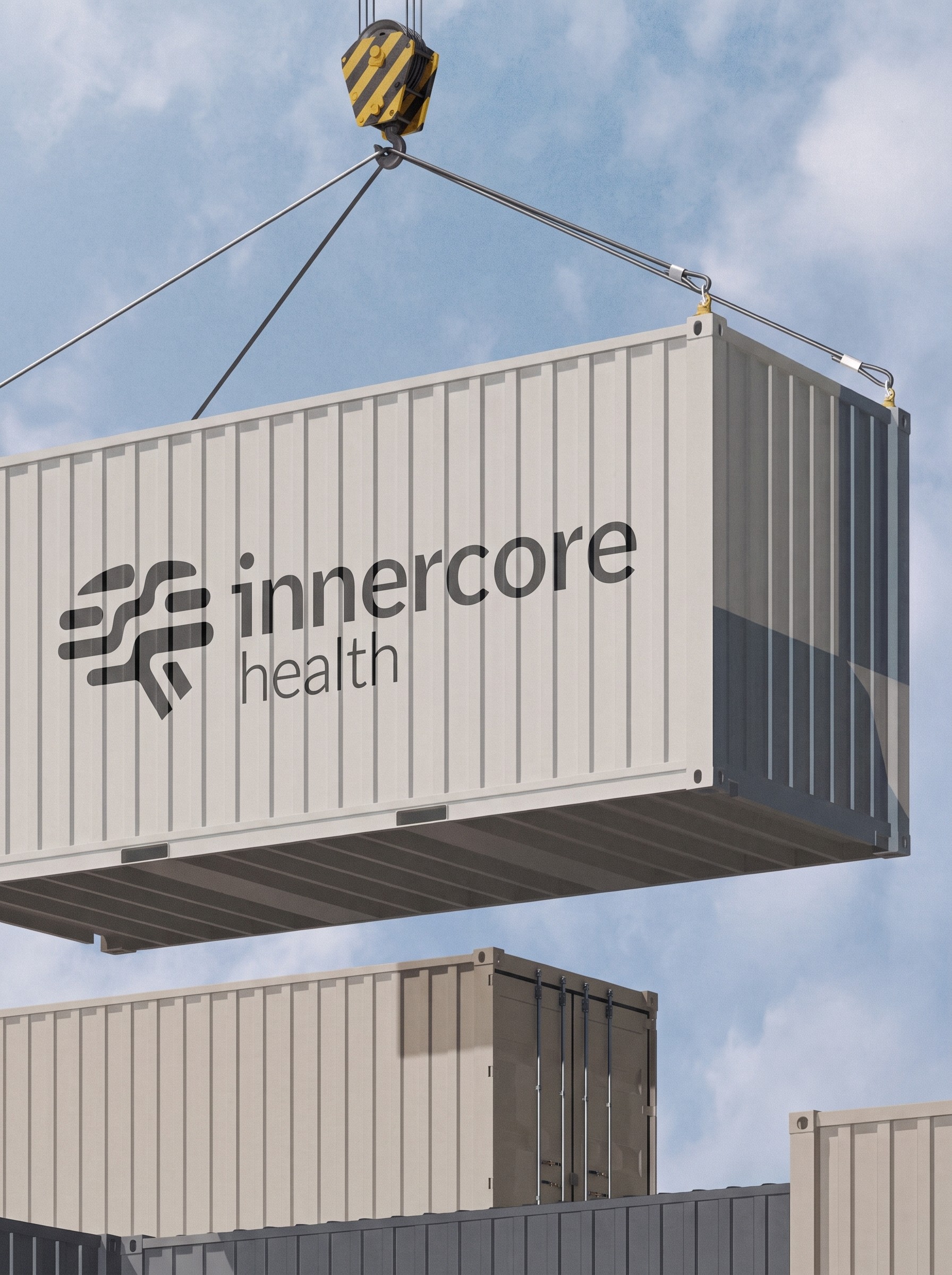
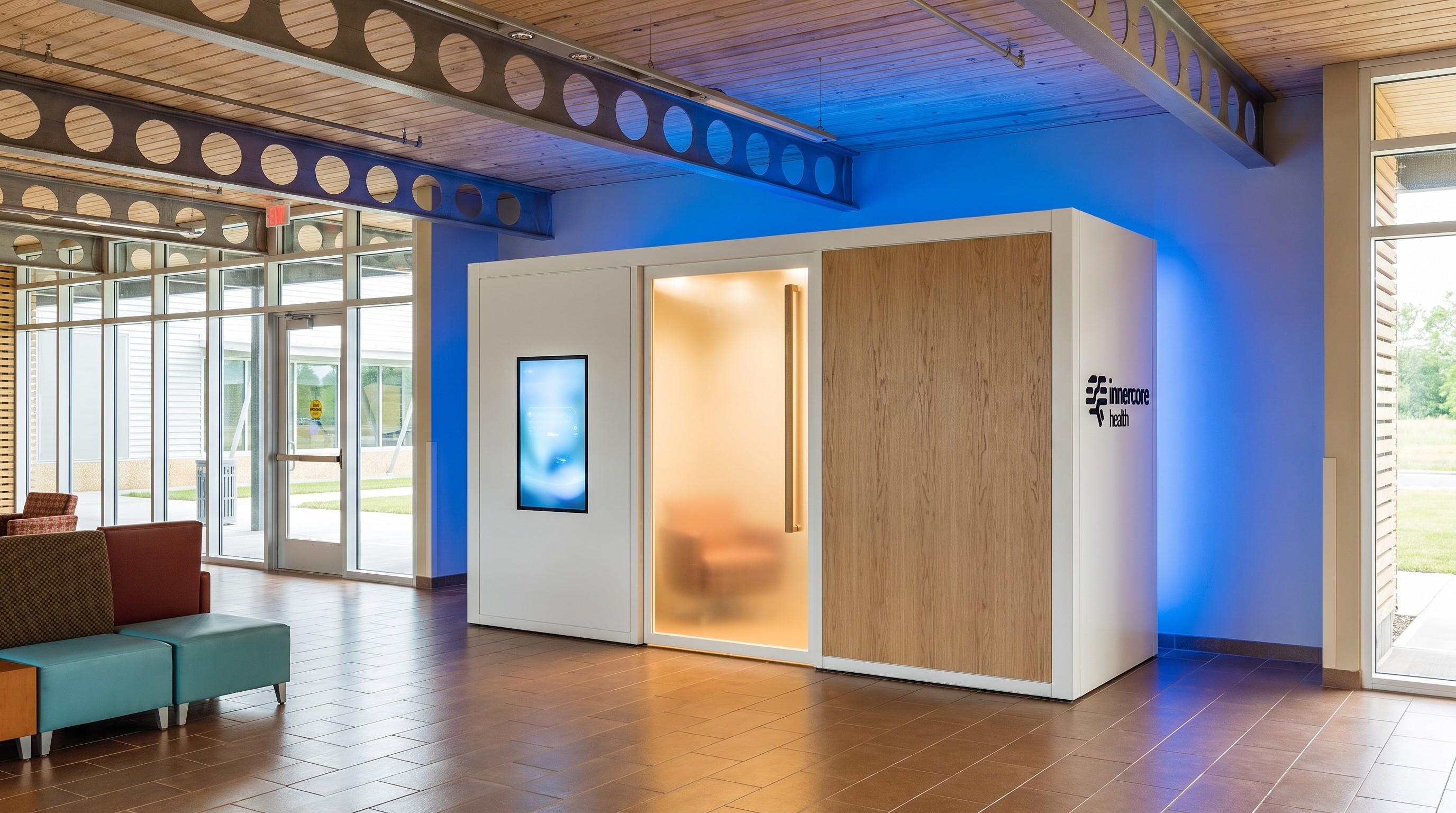
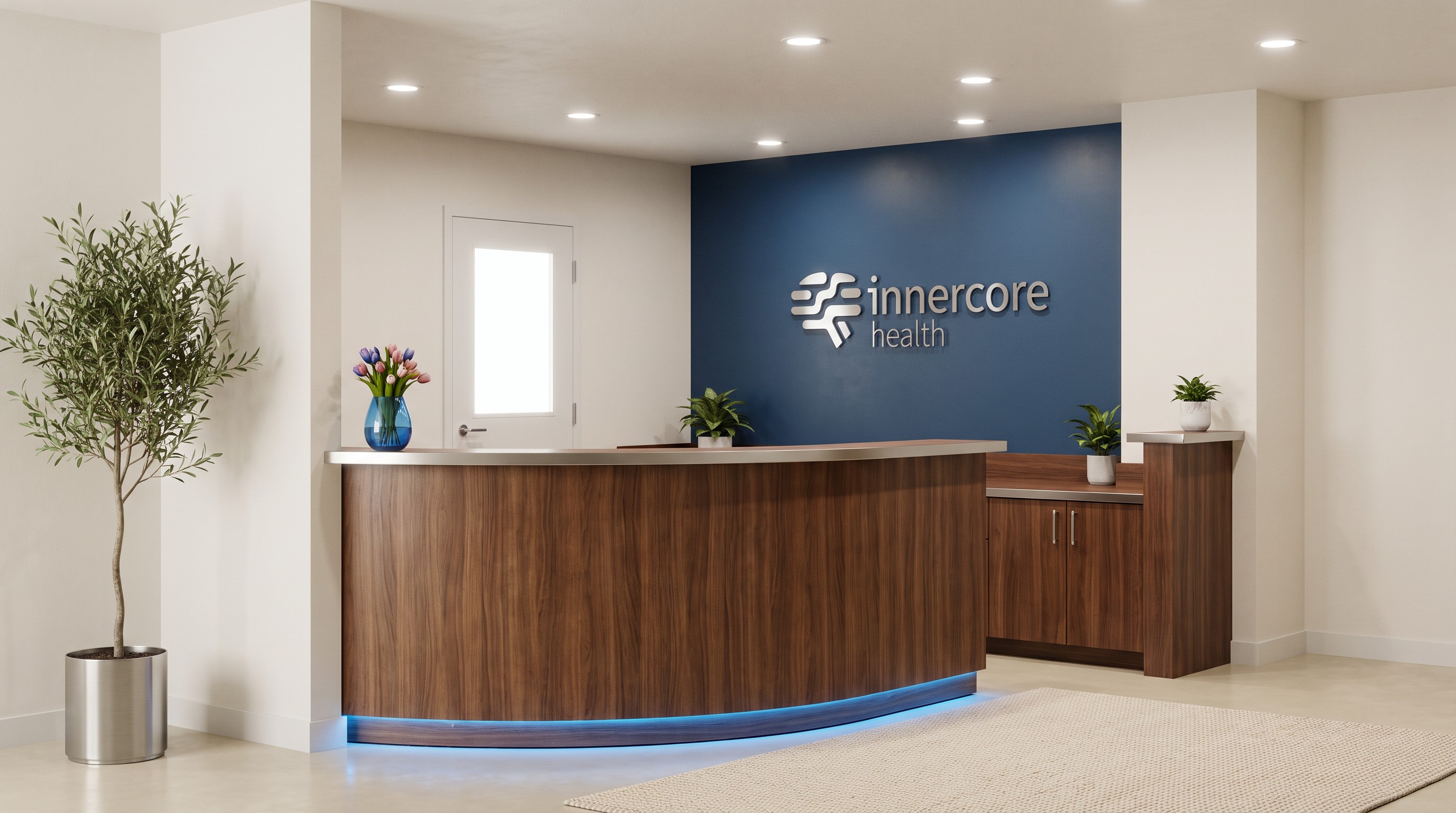
We built the room in four forms so it can reach people where they already are. Flagship sites for a full visit. Mobile units for a campus, a station, or a base. A one-person pod that fits inside an existing space. And rooms inside clinics and hospitals.
Integrated Care
A room inside a clinic, hospital, wellness center, or student center to enhance the care that is already there.