









Return to baseline.
Organizations don't lose good people to one bad quarter. They lose them to a nervous system that never gets the signal to stand down.

The problem
The pattern underneath the dashboard.
Unmanageable workloads. Unclear communication. Lean staffing that stacks three roles onto one person. Employees call it fried, running on empty, unable to switch off. On a dashboard it shows up as presenteeism, absenteeism, and turnover intent that climbs before anyone resigns.
These aren't separate line items to manage one by one: an EAP here, a wellness stipend there. They're signals from one source, nervous systems stuck in crisis mode through an ordinary Tuesday. One root cause. Two sets of symptoms.
How it works
A reflection, not a directive.
A nervous system runs on two settings: sympathetic (alert) and parasympathetic (rest and repair). Understaffing, unclear priorities, and work that never closes out keep employees in the first long after the shift. Recovery needs the second, and a to-do list doesn't get anyone there.
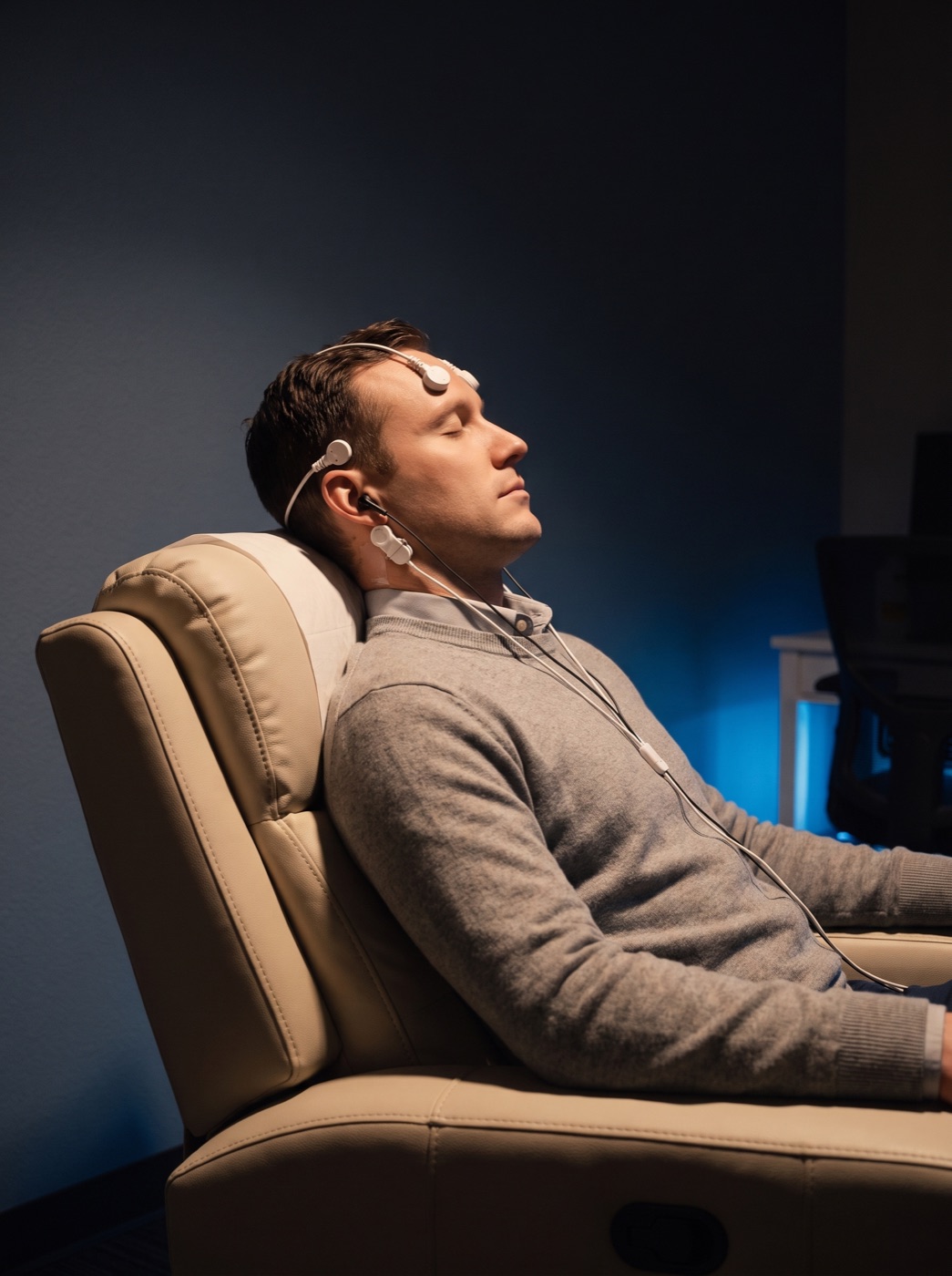
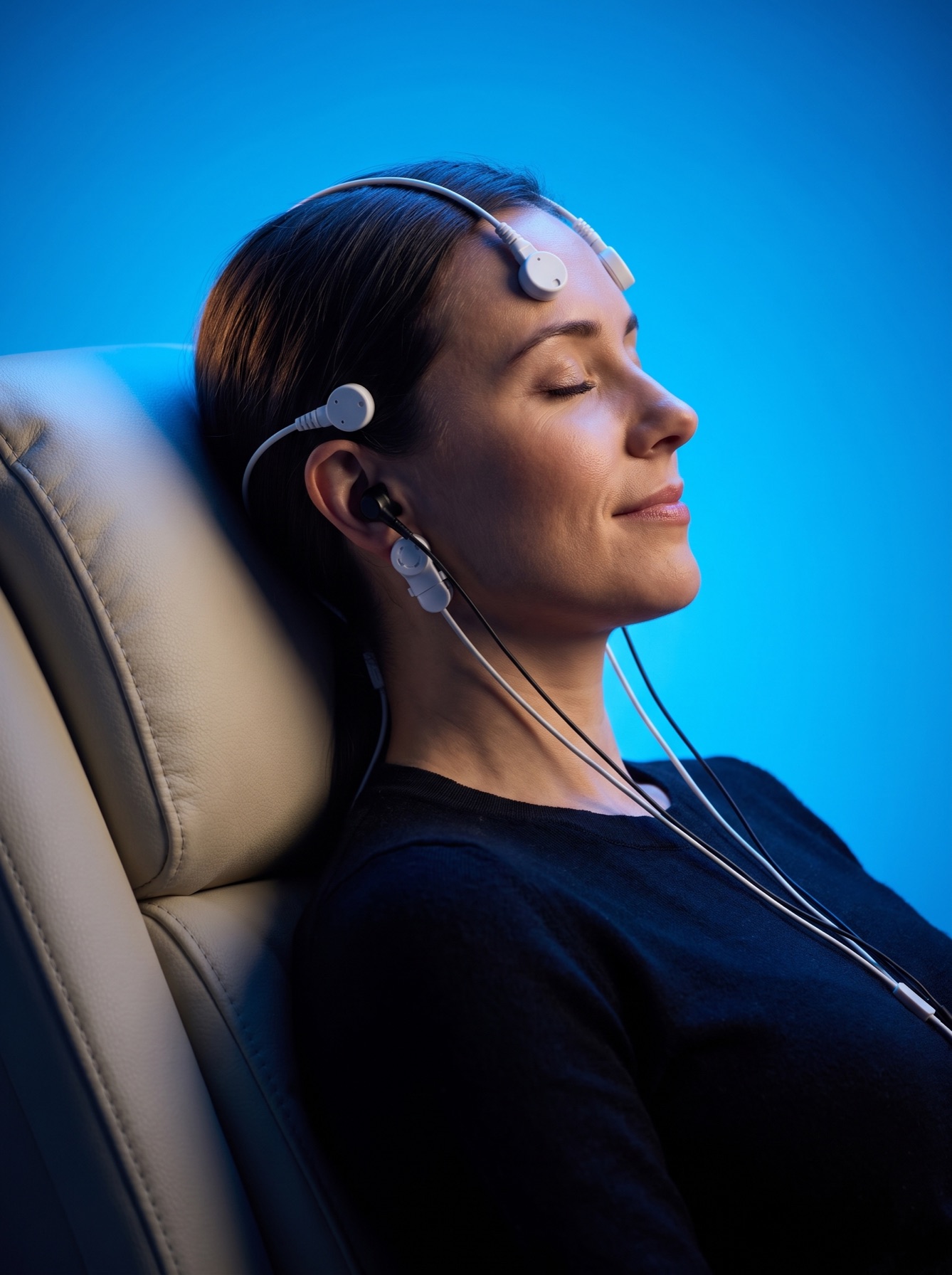
A few sensors read a person's brain activity in real time and play it back as sound, shifting as the brain shifts. There's nothing to do and no app to remember to open. Hearing that accurate reflection gives the brain what it needs to recalibrate itself.
Non-invasive. No medication, no medical procedure. The person rests.
See the mechanism
Reads brain electrical activity through a small number of patented sensors that are more sensitive than EEG sensors in a hospital. Converts dominant frequencies and hemispheric-balance data into audible engineered tones, near-real-time. No electrical, magnetic, or chemical input introduced at any point in the loop.
See more about the science
The autonomic nervous system continuously adjusts internal function, deciding when the body should mobilize for a demand and when it's safe to shift toward rest, recovery, and repair. Sustained job demands keep that system mobilized far past the point where it's actually needed, and healthy regulation depends on the ability to shift back out of that state once the demand eases. When it can't, that's not a discipline gap in the workforce, it's a regulatory one, addressable at the level it actually occurs.
The research
A research foundation, not a wellness trend.
Several of the same high-demand, understaffed environments this vertical is built to serve. This isn't a single-study pilot; it's a technology with a real research lineage behind the product being brought into a workforce program.
Years of research
15+
A 15-year collaboration with the Brain Body Research Program at Wake Forest University School of Medicine.
IRB-overseen studies
14
Populations studied include civilians, active-duty military, emergency responders, and healthcare workers.
Sessions in a course
5 or so
Across about 3 weeks. Not an ongoing routine.
Medication
0 mg
Nothing enters the body. No medical procedure. The person rests.
Studies conducted through Wake Forest University School of Medicine.
The advantage
Three things holding each other up.
The advantage here isn't one feature competing against another vendor's program. Most single-point wellness benefits can point to one of the three. This is built on having all three together, which is also why it shows up across so many different workforce environments rather than one narrow use case.
The mechanism
A mechanism broad enough.
Supports regulation across sleep, stress, and recovery at once rather than training toward one narrow target.
The research base
More than 15 years at an academic medical center.
A research base spanning more than 15 years at an academic medical center.
The relationships
The institutional relationships.
The ones that come with that kind of research history.

The course
The course, start to finish.
What a session addresses, from the first visit on.
The assessment
A short assessment, not a new intake process
A few sensors, a few minutes. Designed to sit inside an existing executive health, EAP, or workforce well-being program rather than stand apart from it as one more benefit to explain.
The session
Reclined, private, 40 to 55 minutes
Most people rest or sleep. Nothing reported back to a manager or HR; the data stays with the individual.
The course
A short course, not an open-ended subscription
Typically 5 or so sessions across about 3 weeks, with optional tune-up sessions afterward. Built to minimize time away from work, not to compete with it.
The session
Inside a session.
Shift-based teams
Built around rotation patterns, not a standard 9-to-5 week.

Nurses, physicians, and manufacturing and transportation teams work against a body clock built for daytime alertness. For shift-based teams, scheduling follows rotation patterns rather than a 9-to-5 week, alongside the fatigue and sleep programs already in place.
What changes
What changes.
Employees report sleeping through the night, not just logging more hours in bed. Less dread walking into a meeting. The weekend back, instead of recovering from the week. For the organization, a lever on absenteeism, presenteeism, and turnover, not one more underused line item in the benefits stack.
Sleep
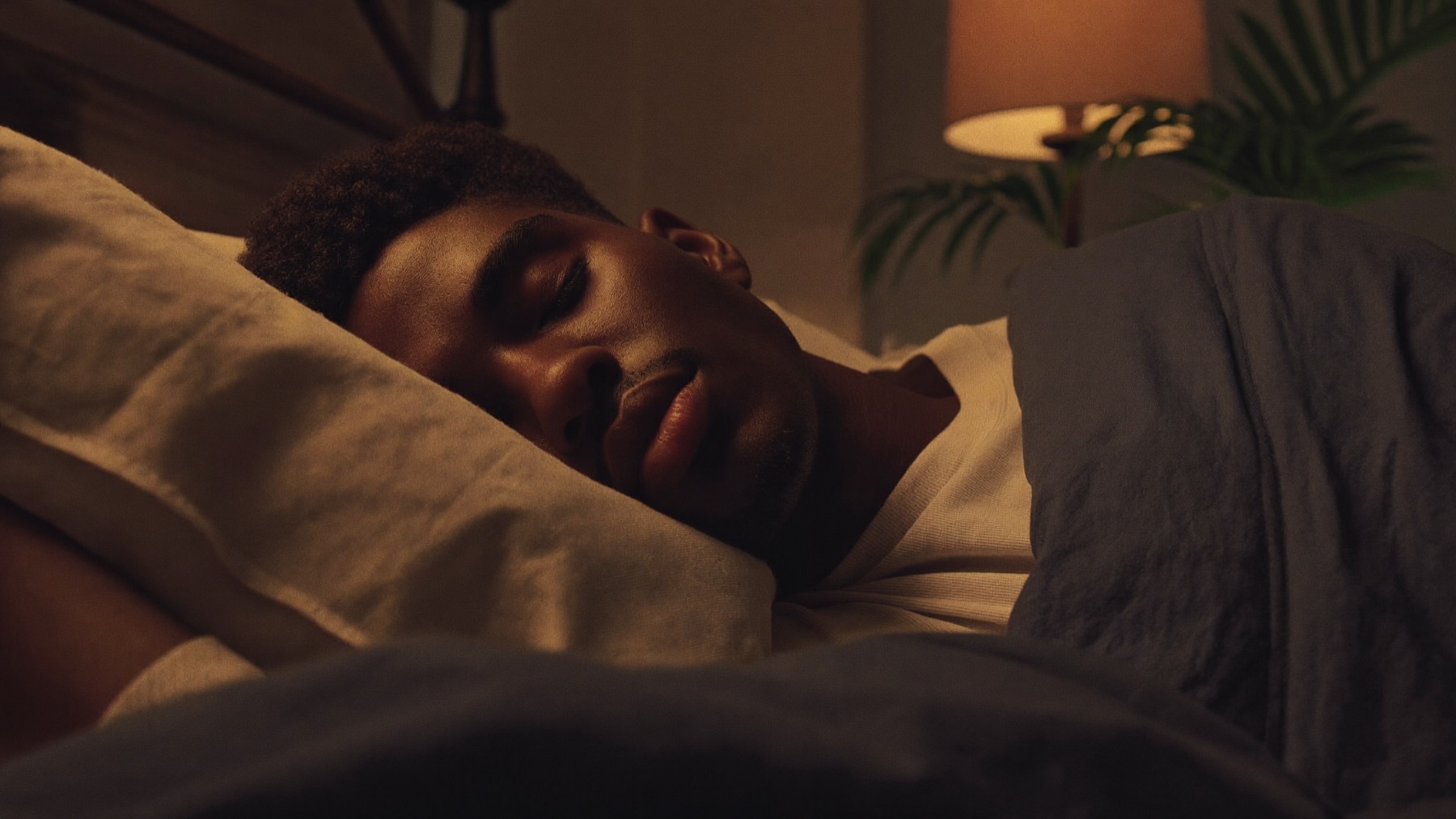
Employees report actually sleeping through the night.
Not just logging more hours in bed.
Presence
Less chest-tight dread walking into a meeting.
More capacity to be present in it.
Weekends
Getting the weekend back.
Instead of spending it recovering from the week before.
Energy
Energy left over for life after 5:00pm.
Not just enough to get through the day.
The organization
For the organization.
A measurable lever on absenteeism, presenteeism, and turnover intent, not another line item competing for the same low utilization as everything else in the benefits stack.
Beyond one program
Related programs.

Military & Veterans
Sleep deprivation is the one universal throughline across both active-duty and veteran populations, the same structural pattern this vertical addresses for civilian shift-based teams.
Explore
Sleep
The individual-facing version of the same regulatory pattern driving so much of what shows up on an HR dashboard.
Explore

Chronic Stress
The nervous-system pattern underneath presenteeism, absenteeism, and disengagement, addressed at the individual level.
Explore
Common Questions
Are you wondering?
How much time does this take employees away from work?
A short assessment, then 5 or so sessions of about 40 to 55 minutes each, scheduled around a team's actual working hours, including shift rotations for 24/7 workforces. Not an extended absence; a handful of appointments across about 3 weeks.
What does this actually cost us, and what's the return?
It depends on the size of your team and how sessions are delivered. We'll go over pricing, and how to measure the return, in your first conversation.
Does this work for a distributed or hybrid workforce, or only employees near a physical location?
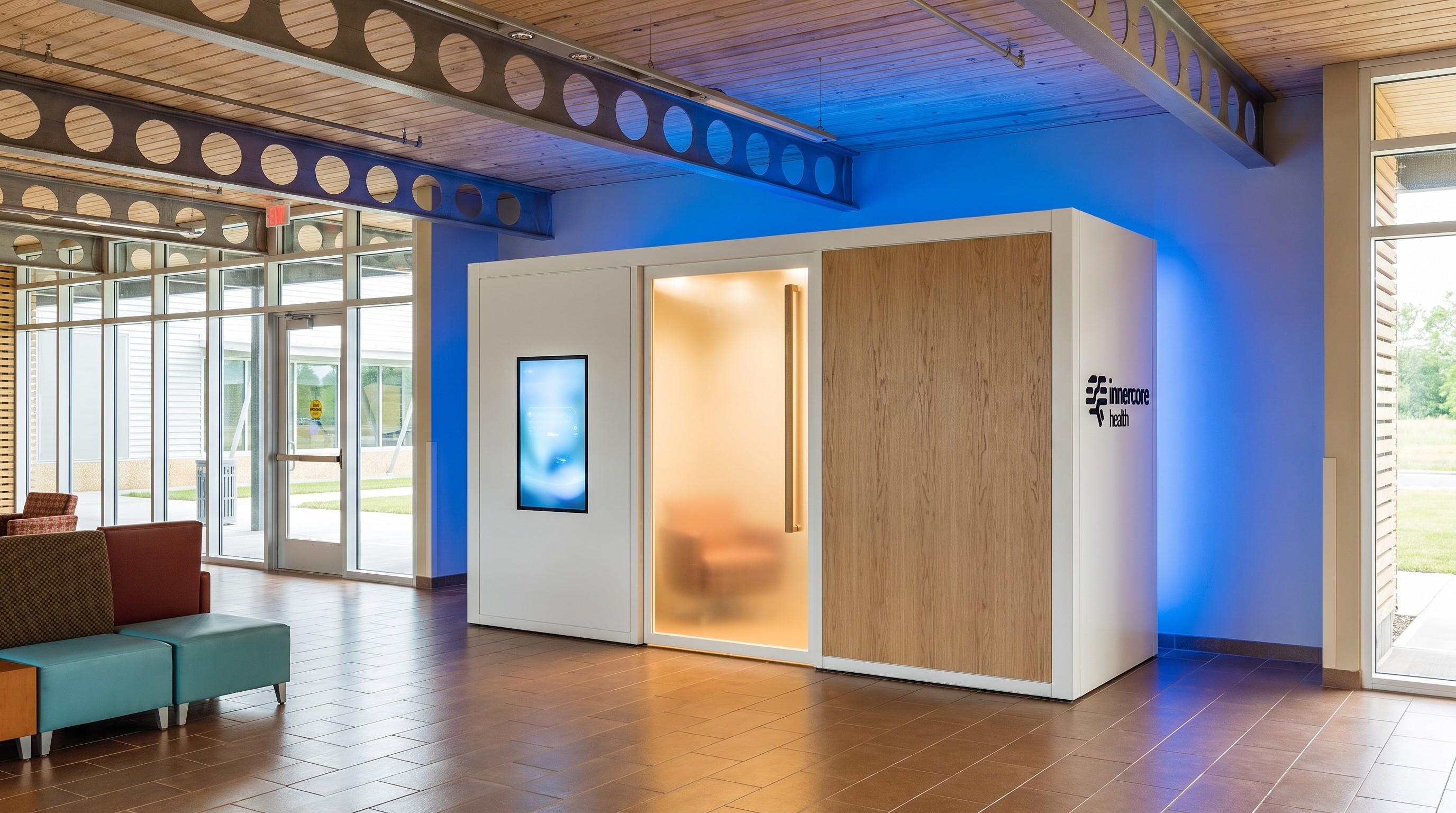
Sessions happen in person, but the room can come to your people: a mobile unit that travels to you, an on-site room in your own facility, or a compact room inside a gym or clinic nearby, as well as our Supersites. We'll work out what fits a distributed team in your first conversation.
Is this safe?
Yes. Non-invasive, no medication, no medical procedure. The sensors only listen; nothing is sent into the brain.
What does a session actually feel like?
Most people find it deeply restful. Many rest or sleep through it, similar to a quiet moment in a comfortable chair. Sensors on, earbuds in, nothing to practice or get right.
How long until I notice something?
Many people notice a shift by the second session, within a short, defined course of 5 or so sessions across about 3 weeks, not an open-ended commitment.
Bring regulatory health to your workforce.
Not a wellness seminar, and not another app nobody opens. A short, private program built to fit inside the workforce health strategy already in place, designed to help employees' bodies actually recover instead of just managing the fallout of never getting the chance to.