














Acoustic Neuromodulation
It listens to the brain. Then reflects it back.
Not a stimulant. Not a training program. A closed-loop system that listens to the brain and reflects it back, in real time, as sound.
Closed-loop acoustic neuromodulation
A patented, closed-loop brain technology that acts as a reset button for the nervous system.
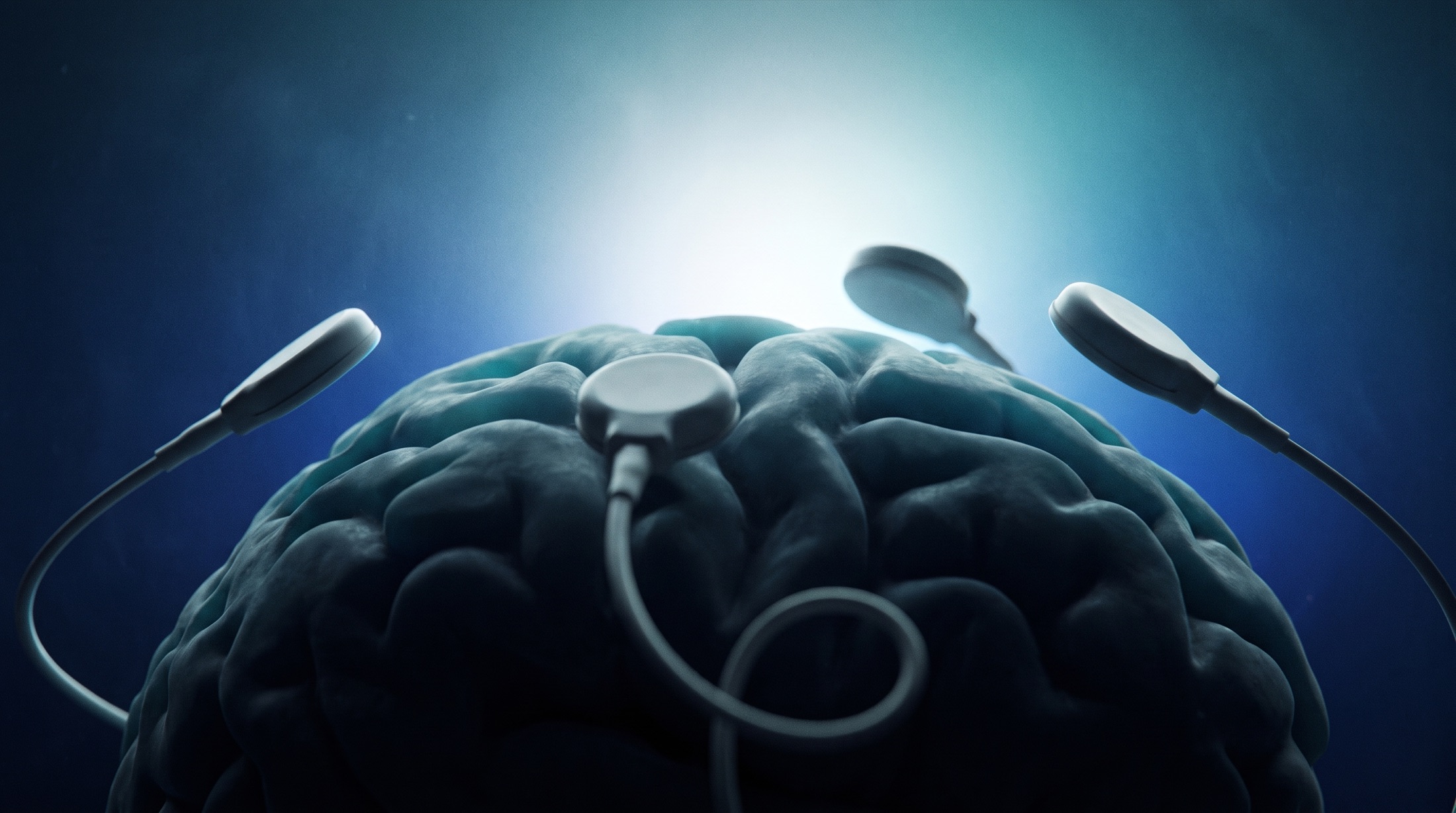
Sensors
A small number of sensors rest on the scalp.
Continuously reading real, moment-to-moment brain activity, unique to each person, not a fixed baseline.
Software
Proprietary software identifies the brain's dominant frequencies.
Built on a closed-loop approach developed over years of academic research.
Earbuds
Engineered tones play back through earbuds in near real time.
Giving the brain an accurate reflection of its own signal to respond to.
How it works
Sense. Reflect. Recalibrate.
Sensing
Reading the signal.
A small number of sensors on the scalp continuously read electrical brain activity.
Signal processing
Finding the pattern.
Software identifies the dominant brainwave frequencies and the balance of activity across the brain, unique to each person, moment to moment.
Acoustic output
Reflecting it back.
Those frequencies convert into tones, played back through earbuds in near real time.
Closed loop
Closed-loop, not open-loop.
The person does nothing but rest. No task, no training, no effort to make. Hearing an accurate, real-time reflection of one's own brain activity is what prompts the brain to self-adjust, an auto-calibration, not a change imposed from outside.
A meditation app or white noise plays the same thing regardless of who's listening. This technology continuously reads a person's own real-time state and responds to it, second by second. That distinction is the whole mechanism.
The signal
What the signal actually reflects.
Brainwave frequency reflects what the brain is doing: slower frequencies track with subconscious, background processes and sleep; faster frequencies track with active, conscious effort, like problem-solving or speech.
An imbalance between the brain's two hemispheres is linked to how a nervous system holds stress. Left-dominant (parasympathetic) tends to track with freeze or numbing, right-dominant (sympathetic) with fight-or-flight.
The autonomic nervous system itself runs on two settings: sympathetic, for alert and ready, and parasympathetic, for rest and repair. Chronic or acute stress can leave a person stuck in the first one.
The premise is allostasis, not homeostasis: the brain isn't defending a fixed setpoint, it's constantly adapting. That adaptability is what makes a real-time feedback loop possible. Outcome measures go beyond self-report, into heart rate variability and baroreflex sensitivity.
See more about the science
The autonomic nervous system's reach is broad: heart rate and rhythm, blood pressure and vascular tone, breathing, digestion, temperature regulation, immune and inflammatory response. It's not one isolated system. The brain, autonomic nervous system, endocrine system, cardiovascular system, and immune system continuously communicate with each other. When a threat or demand appears, the brain mobilizes the body, raising alertness and adjusting cardiovascular, respiratory, hormonal, and metabolic activity. Healthy regulation includes the ability to shift back out of that state once the demand has passed. Problems emerge when that transition doesn't happen reliably, when the body stays activated long after a stressor has passed, or has difficulty settling into the state needed for real rest and recovery. This is why the underlying focus here is the brain's capacity to regulate, not one organ, symptom, or condition at a time.

The course
From baseline to a short course.
What a typical course looks like, visit to visit.
First visit
A short baseline assessment
Under five minutes, sensors only. No radiation, no scan.
5 or so sessions
A short, defined course
Each session runs 40 to 55 minutes, spaced across about 3 weeks. Not months.
By session two
Many people notice something
Benefits tend to build from there, described in terms of months, not days.
After the course
Tune-ups, only if needed
Occasional tune-up sessions are available afterward. Never required.
The process
One session, explained minute by minute.
To Start
Reclined and comfortable, sensors on, earbuds in, nothing else to do.
First Few Minutes
The tone registers as noise at first, something the mind still tracks.
Past 10 Minutes
Without deciding to, attention stops tracking the tone. Not falling asleep, though some people do. The brain stops monitoring and starts just responding.
45 Minutes Later
Same room, same afternoon, but a real chance to downshift, instead of just sitting still.
Sensors On, Earbuds In
Just Background Noise
Attention Lets Go
A Nervous System That Downshifted
The evidence
More than 15 years of academic research.
In partnership with Wake Forest University School of Medicine. Research conducted through the Brain Body Research Program found meaningful improvement across multiple measures in the weeks following intervention. Outcome measures spanned self-report and objective physiological markers, heart rate variability and baroreflex sensitivity among them, not subjective impression alone.
Reduced perceived stress
79%
Reduced anxiety
84%
Reduced depressive symptoms
83%
Reduced insomnia
83%
Reduced traumatic stress symptoms
81%
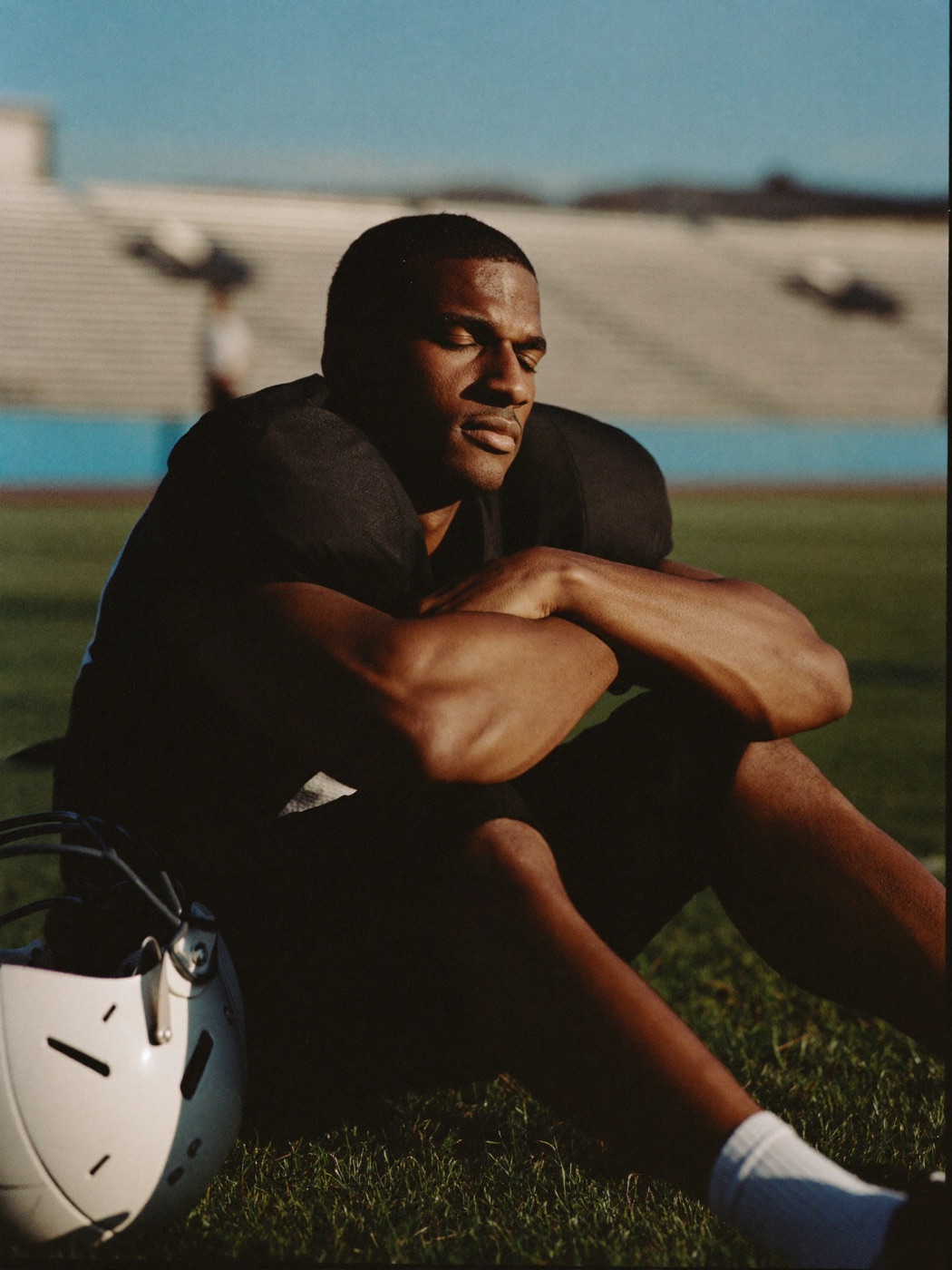
Reduced concussion symptoms
88%
Findings published through Wake Forest University School of Medicine.
The partnership
Not developed in isolation.

This technology grew out of a multi-year partnership with Wake Forest University School of Medicine's Brain Body Research Program, studying stress, sleep, and autonomic regulation in real populations. Long-running academic research means the science has been tested and built on over years, not produced once and left alone.
The claim
A broader claim than one feature.
Most technologies in this category train the brain toward a target state. This one supports the nervous system's own capacity to regulate. That's a broader claim than "improves focus," and it's why one mechanism shows up across so many uses.
The brain does the work from the inside out. It only moves if and when it's ready to. There is no single "correct" pattern being trained toward, because no two brains are alike.
The approach behind this technology is patent-protected.
The alternatives
Compare the mechanism, not the marketing.
How this technology stacks up against every other approach to a dysregulated nervous system.
Ours
This Technology
Transcranial Magnetic Stimulation (TMS)
Electroconvulsive Therapy (ECT)
Psychiatric Medication
Traditional Neurofeedback
Meditation and Mindfulness
The alternatives
What each of the others asks of you.
TMS
Transcranial Magnetic Stimulation.
Magnetic coils on the scalp actively stimulate specific brain regions, introducing energy directly into neural tissue to force cellular firing. Side effects can include scalp discomfort, headaches, or, rarely, seizure.
ECT
Electroconvulsive Therapy.
Electrical currents deliberately induce a controlled seizure. Highly invasive, requiring anesthesia and carrying real risks: memory loss, confusion, cardiovascular stress.
Medication
Psychiatric medication.
Alters neurotransmitter levels systemically, throughout the body. Effective for many people, but can carry risk of side effects, tolerance, or dependence.
Neurofeedback
Traditional neurofeedback.
A clinician sets a target brainwave pattern, and the person works, consciously, toward it, session after session, often through game-like rewards.
Mindfulness
Meditation and mindfulness.
Entirely safe, but demanding: sustained willpower, daily discipline, active effort to quiet the mind.
Not this
What this isn't.
Hypnosis
Not hypnosis.
You stay fully aware the entire time.
White noise
Not white noise.
It reads your actual brain activity, it doesn't play the same thing to everyone.
Training
Not a training program.
There's no target pattern, no skill to practice.
Medication
Not a stimulant or a sedative.
Nothing enters your body.
Common Questions
Are you wondering?
A few things people often assume before their first session.
Is this hypnosis, or some kind of trance?
No. The person stays fully aware throughout. Nothing is suggested or induced. The brain simply hears an accurate reflection of its own activity.
Isn't this the same as white noise or a relaxation track?
No. White noise plays the same thing regardless of who's listening. This technology reads a person's own real-time brain activity and reflects it back, second by second. Nobody else's session sounds like this one.
Do I need to concentrate, or do it "right"?
No. There's no task, no target, no way to do it wrong. The brain moves only if and when it's ready to.
Is this safe?
Yes. Non-invasive, no medication, no medical procedure. The sensors only listen; nothing is sent into the brain.
What does a session actually feel like?
Most people find it deeply restful. Many rest or sleep through it, similar to a quiet moment in a comfortable chair. Sensors on, earbuds in, nothing to practice or get right.
How long until I notice something?
Many people notice a shift by the second session, within a short, defined course of 5 or so sessions across about 3 weeks, not an open-ended commitment.
What does this cost, and is it covered by insurance?
Cost depends on the course that's right for you, or for organizations, on the partnership. We'll go over pricing, and whether insurance or a benefit plan can help, in your first conversation.

Begin with one conversation.
Request more information or schedule an initial assessment. We are happy to answer your questions.