
















Life changes. Your brain is trying to keep up.
From demanding careers and caregiving to pregnancy, hormonal transitions, and menopause, women move through changes that affect sleep, stress, and energy. Our technology supports the brain and body's natural ability to restore balance.
Two chapters
Two different chapters. One overloaded system.
Different hormones, different chapters. Same nervous system, asking for support.
Postpartum
It's the wave of adrenaline that hits the second you finally get a chance to sleep, the hypervigilance of a nervous system that won't clock out.
Perimenopause
It's brain fog like wading through quicksand, sleep that fragments into jet lag with a baby waking you up who isn't even there anymore, mood that spirals somewhere between wired and tired.
How it works
How it works.
Your nervous system runs on two settings: sympathetic (alert) and parasympathetic (rest and repair). Hormonal shifts, from postpartum recovery to perimenopause, can leave it stuck closer to the first. Getting back isn't about trying harder to relax.
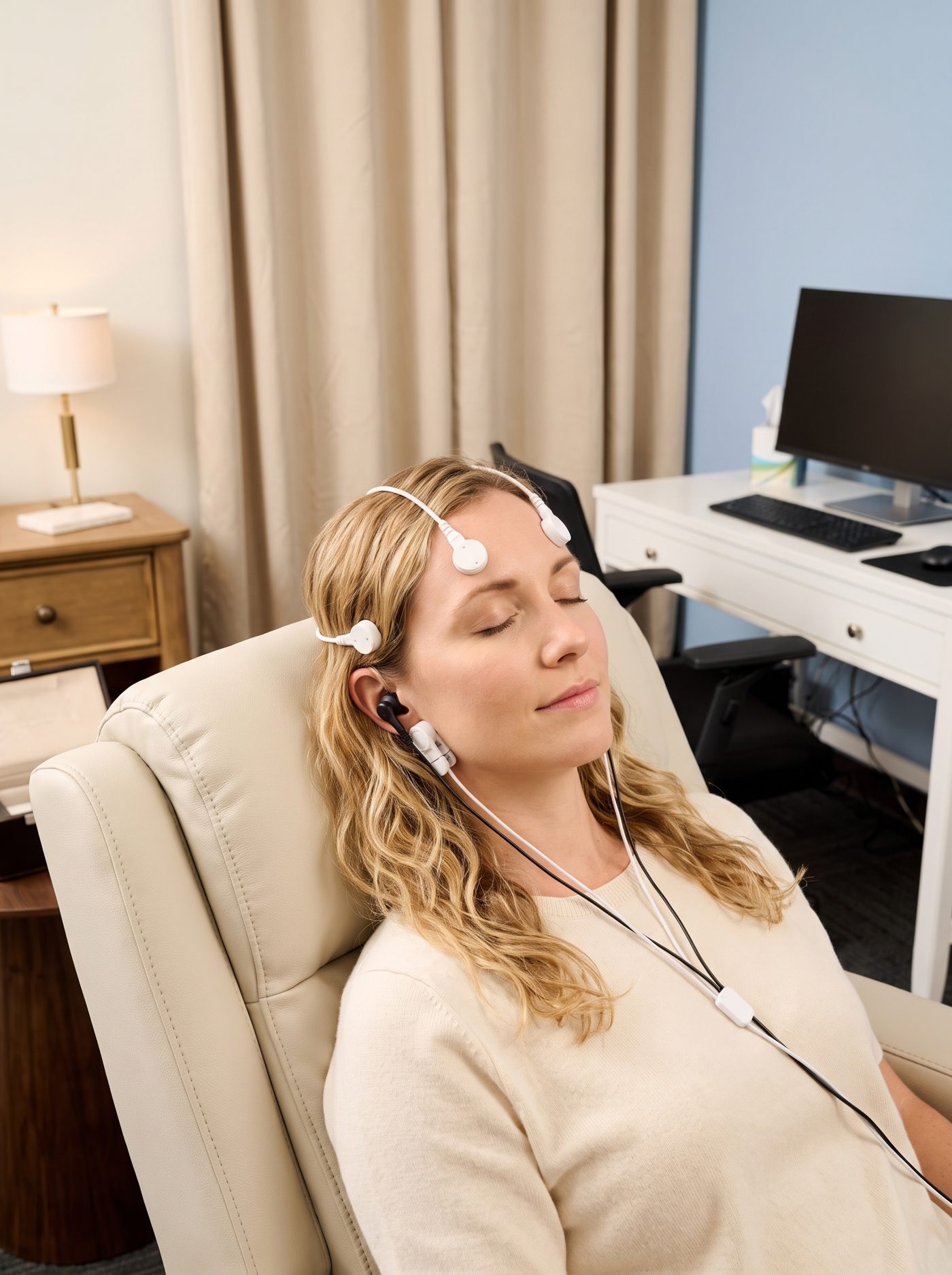
A few sensors read your brain's activity in real time and play it back to you as sound, shifting as your brain shifts. There's nothing to do, no exercise, no script. Hearing that accurate reflection gives your brain what it needs to recalibrate itself.
Non-invasive. No medication, no medical procedure. You rest.
See the mechanism
Reads brain electrical activity through a small number of patented sensors that are more sensitive than EEG sensors in a hospital. Converts dominant frequencies and hemispheric-balance data into audible engineered tones, near-real-time. No electrical, magnetic, or chemical input introduced at any point in the loop.
See more about the science
Your autonomic nervous system continuously adjusts internal function in response to what's happening in your body, hormonal shifts included, deciding when to mobilize and when it's safe to shift toward rest and repair. A major hormonal transition places real, measurable demand on that system. Your brain does this work from the inside out, it only shifts when it's ready to, on its own timeline, not a generic one applied the same way to every symptom.
Built around you
Built around your own brain activity.

A short assessment, not a spa intake: a few sensors, a few minutes, reading your actual brain activity instead of asking you to describe how you feel. Each session is private, about 40 to 55 minutes, and you simply rest. It's a short course, typically five sessions over about three weeks.
The research
Built on research that already includes this.
Years of research
15+
A 15-year collaboration with the Brain Body Research Program at Wake Forest University School of Medicine.
IRB-overseen studies
14
Hormone-related dysregulation, including menopause, is already among the conditions studied, not a new application being tried on this audience for the first time.
Sessions in a course
5 or so
Across about 3 weeks. Not an ongoing routine.
Medication
0 mg
Nothing enters your body. No medical procedure. You rest.
Studies conducted through Wake Forest University School of Medicine.

The course
The course, start to finish.
What a session addresses, from the first visit on.
The Assessment
A short assessment, not a spa intake.
A few sensors, a few minutes. This reads your actual brain activity, it doesn't ask you to describe how you're feeling and hope that's enough.
The Session
The session.
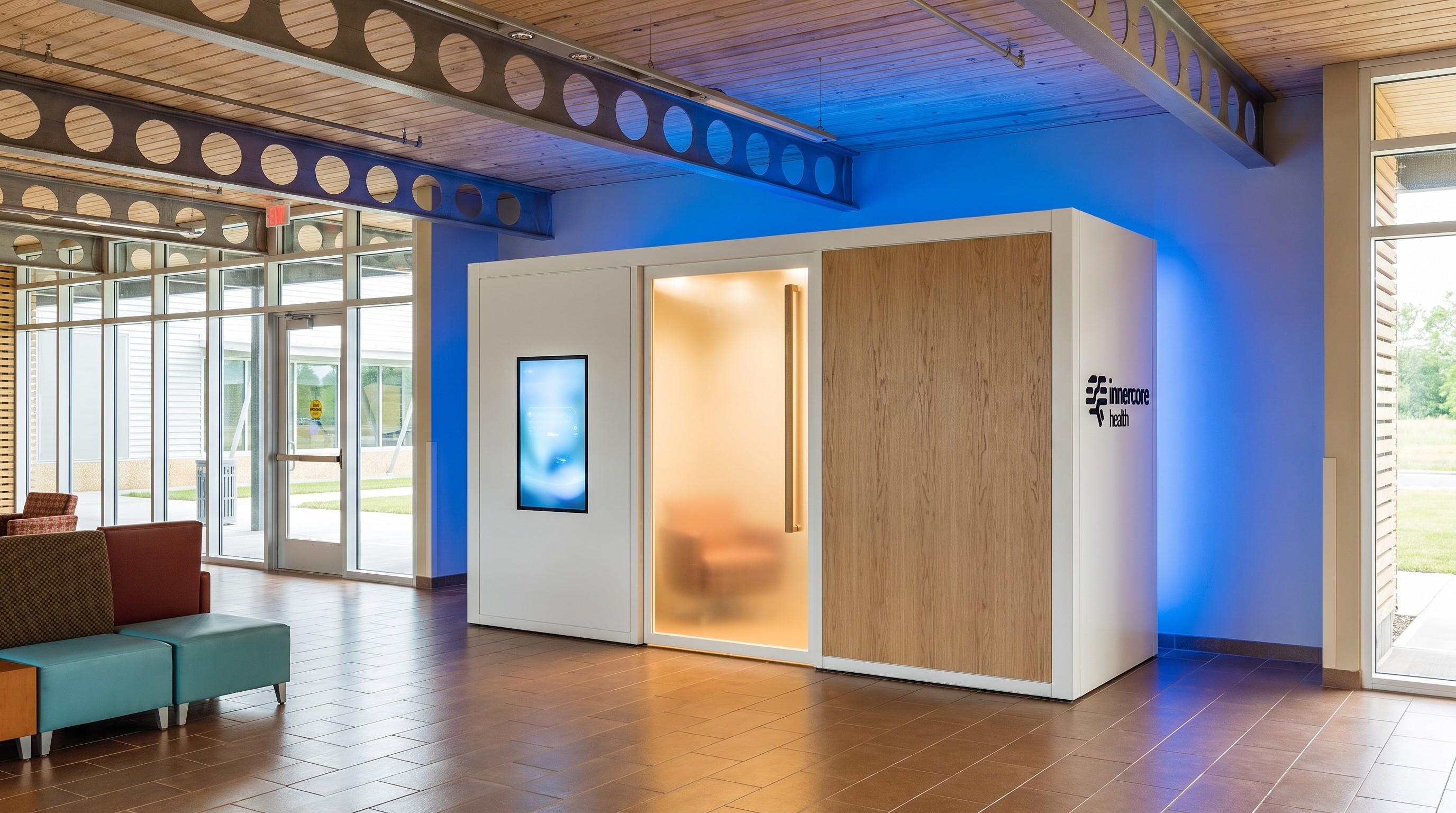
Private, roughly 40 to 55 minutes. Not a treatment you have to stay alert for or actively participate in, but not a massage either: your brain is doing real, measurable work the whole time, even while you rest.
The Course
A short course, not an open-ended commitment.
Typically 5 or so sessions across about 3 weeks. Built around what your actual brain activity shows, not a generic wellness protocol applied the same way to everyone.
What changes
What changes.
Feeling like yourself again
not just managing the day
Postpartum
catching up on real sleep, sleep debt that finally starts paying down instead of compounding
Perimenopause
brain chemistry that feels more balanced, sleeping seven hours in a row instead of pretending that's not the goal anymore
Enough of that "vibrant" feeling back
to handle daily life without running on empty
Validation
not just relief: this was never just stress, and now there's something that actually addresses what it is
Common Questions
Are you wondering?
A few things people ask before their first session.
How much time does this actually take? I don't have room for one more thing.
A short assessment, then 5 or so sessions of about 40 to 55 minutes each, across about 3 weeks. Not a new standing commitment stacked on top of everything else you're already managing.
I'm exhausted from researching and trying things that don't work. Why is this different?
This isn't one more supplement stack or protocol to manage on your own. It reads your own real-time brain activity and responds to it directly, there's no trial-and-error regimen to maintain, no new routine to remember.
Does this actually understand what's happening to me hormonally, or is it generic stress advice?
This is built around your brain and autonomic nervous system's real response to hormonal shifts, postpartum or perimenopausal, not a generic stress-management approach with your symptoms layered on top.
Is this actually going to help, or is it another "wellness" thing that doesn't take this seriously?
We know that fear is real, and it's earned. This is built on 15+ years of research and 14 IRB-overseen studies, with hormone-related dysregulation already among the conditions studied, not a wellness trend retrofitted to your symptoms after the fact.
Is this safe?
Yes. Non-invasive, no medication, no medical procedure. The sensors only listen; nothing is sent into the brain.
What does a session actually feel like?
Most people find it deeply restful. Many rest or sleep through it, similar to a quiet moment in a comfortable chair. Sensors on, earbuds in, nothing to practice or get right.
How long until I notice something?
Many people notice a shift by the second session, within a short, defined course of 5 or so sessions across about 3 weeks, not an open-ended commitment.
What does this cost, and is it covered by insurance?
Cost depends on the course that's right for you, or for organizations, on the partnership. We'll go over pricing, and whether insurance or a benefit plan can help, in your first conversation.
Start understanding what your brain is actually doing.
Not a wellness routine to maintain, and not one more thing to research on your own. A short, private course built around what's actually happening in your brain and body right now.