















Readiness starts with recovery.
Military demands don't end with a shift, a deployment, or a career. Tempo, irregular schedules, and broken sleep keep a nervous system switched on long after the mission needs it.

The problem
Two directions, one broken feedback loop.
Active duty and veteran aren't the same problem. Active duty carries too much tempo for too long, with no real downtime. Veterans face the sudden loss of structure after separation, with the same activated nervous system and nowhere to point it.
Different symptoms, described differently: guarding and checking behavior that doesn't go away off duty, needing to keep moving or burn off energy just to feel normal, or simply being tired in a way that doesn't resolve with sleep. Two directions. One broken feedback loop.
The mechanism
How it works.

A nervous system runs on two settings: sympathetic (alert, ready, on) and parasympathetic (rest, recover, repair). Operational tempo requires living in the first one for extended periods; the job depends on it. Recovery requires the second, and neither training nor willpower moves a person there on command.
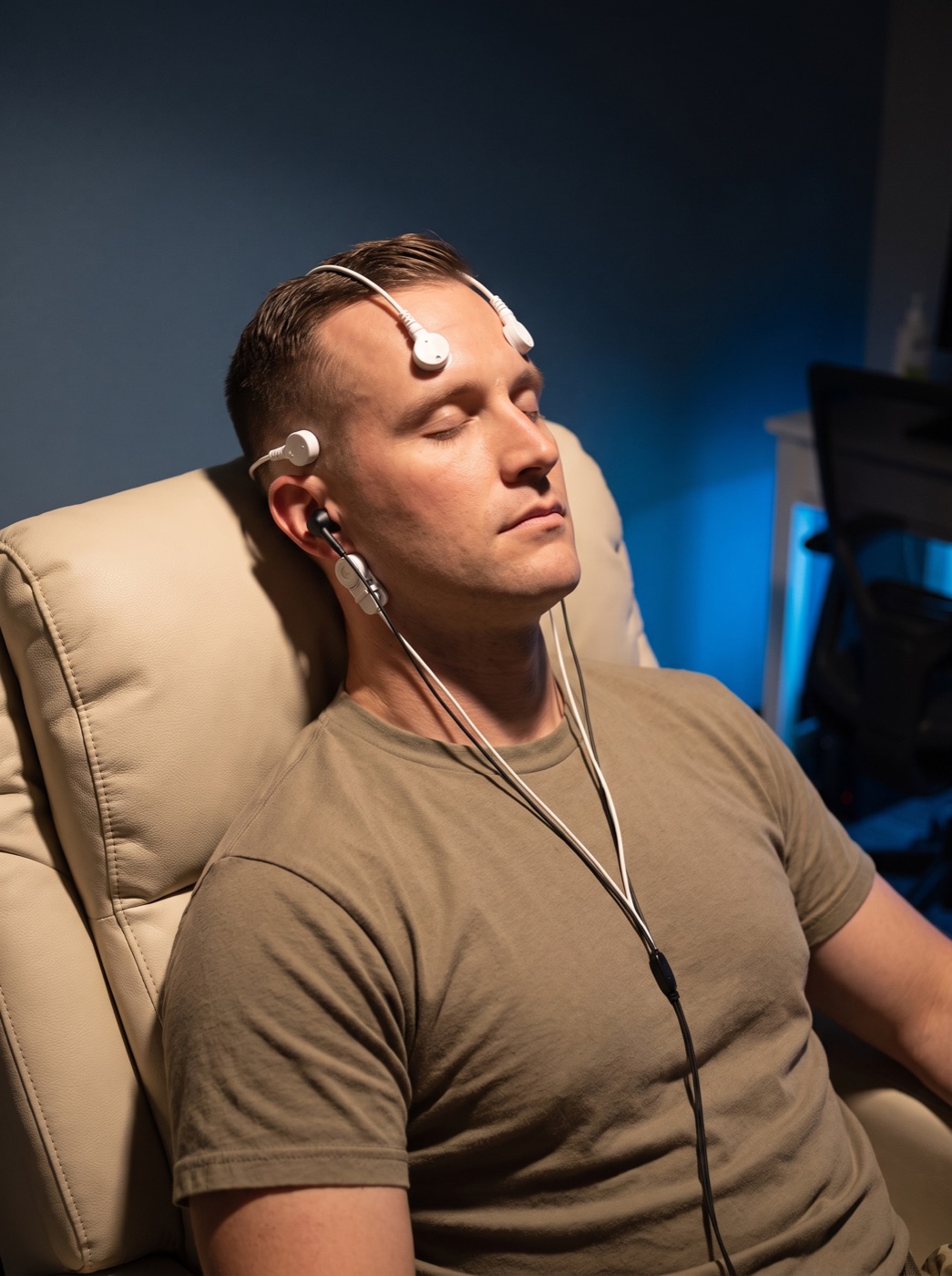
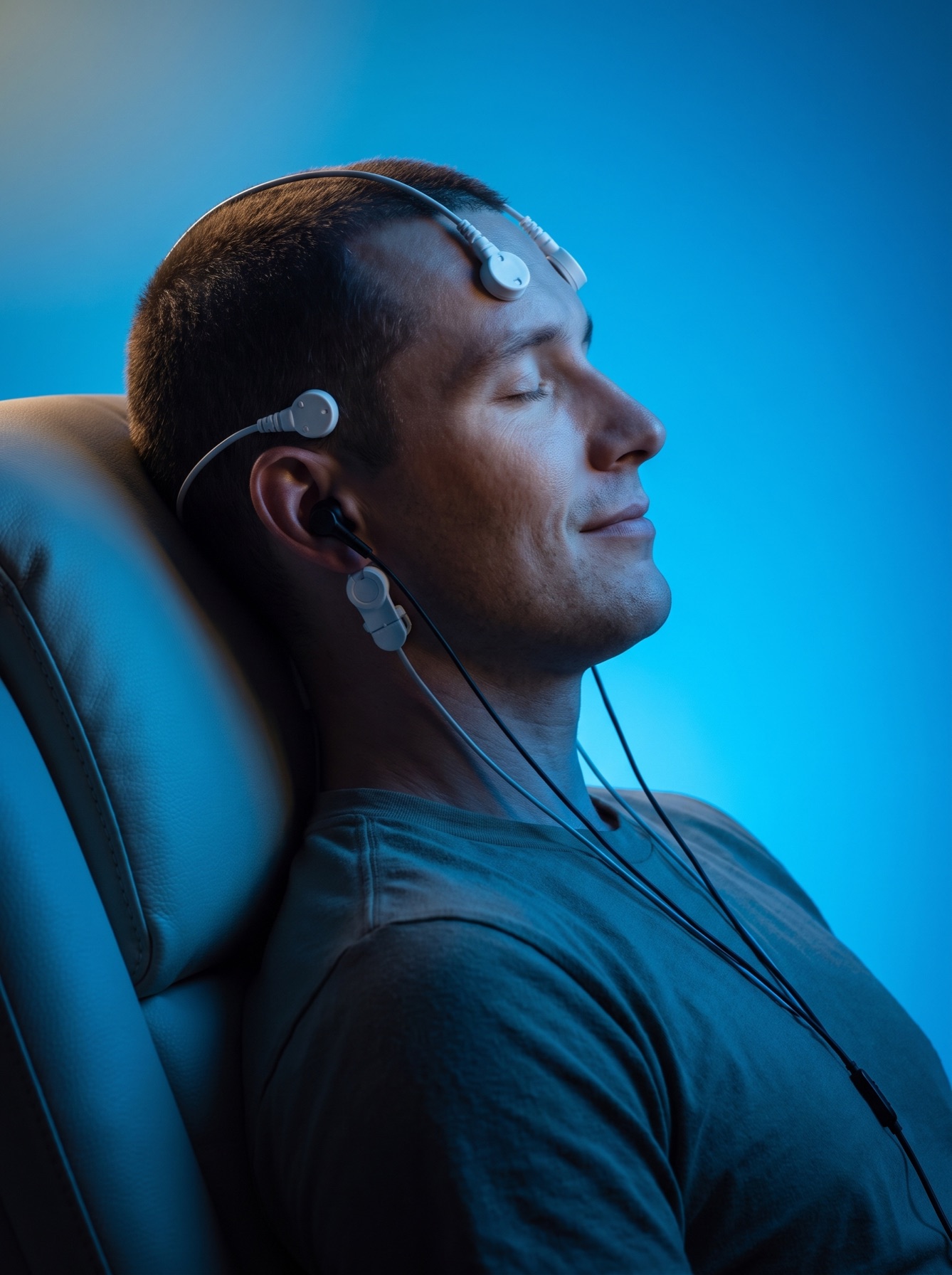
A few sensors read a person's brain activity in real time and play it back as sound, shifting as the brain shifts. There's nothing to do, no exercise, no script. Hearing that accurate reflection gives the brain what it needs to recalibrate itself.
Non-invasive. No medication, no medical procedure, no requirement to revisit or discuss what happened. The person rests.
See the mechanism
Reads brain electrical activity through a small number of patented sensors that are more sensitive than EEG sensors in a hospital. Converts dominant frequencies and hemispheric-balance data into audible engineered tones, near-real-time. No electrical, magnetic, or chemical input introduced at any point in the loop. No exposure or recall protocol of any kind.
See more about the science
When a threat or significant demand appears, the brain rapidly mobilizes the body, raising alertness and adjusting cardiovascular, respiratory, hormonal, and metabolic activity. Healthy regulation includes the ability to shift back out of that state once the demand has passed. Operational tempo and, for veterans, the abrupt loss of that tempo, both interrupt that transition in different directions. Neither is a discipline problem; both are regulatory ones, addressable at the level they actually occur.
The research
Studied alongside the populations it's built for.
Active-duty military populations are among those already studied, not a new application being tested for the first time on this audience.
Years of research
15+
A 15-year collaboration with the Brain Body Research Program at Wake Forest University School of Medicine.
IRB-overseen studies
14
Active-duty military populations are among those already studied.
Sessions in a course
5 or so
Across about 3 weeks, with optional tune-up sessions afterward.
Medication
0 mg
Nothing enters the body. No medical procedure, no exposure protocol. The person rests.
Studies conducted through Wake Forest University School of Medicine.
The advantage
Three things holding each other up.
The case here isn't one feature against a competing program. Most single-purpose readiness or resilience tools can point to one of the three. This is built on all three together.
The mechanism
A mechanism broad enough.
Supports regulation across sleep, focus, and emotional control at once rather than training toward one narrow target.
The research base
More than 15 years at an academic medical center.
A research base spanning more than 15 years at an academic medical center.
The relationships
The institutional relationships.
The ones that come with that history.

The protocol
The protocol, start to finish.
What a session addresses, from the first visit on.
A few minutes
A short assessment, not an evaluation
A few sensors, a few minutes. Nothing here functions as, or feeds into, a fitness-for-duty evaluation, a security clearance review, or a personnel record.
40-55 minutes
The session
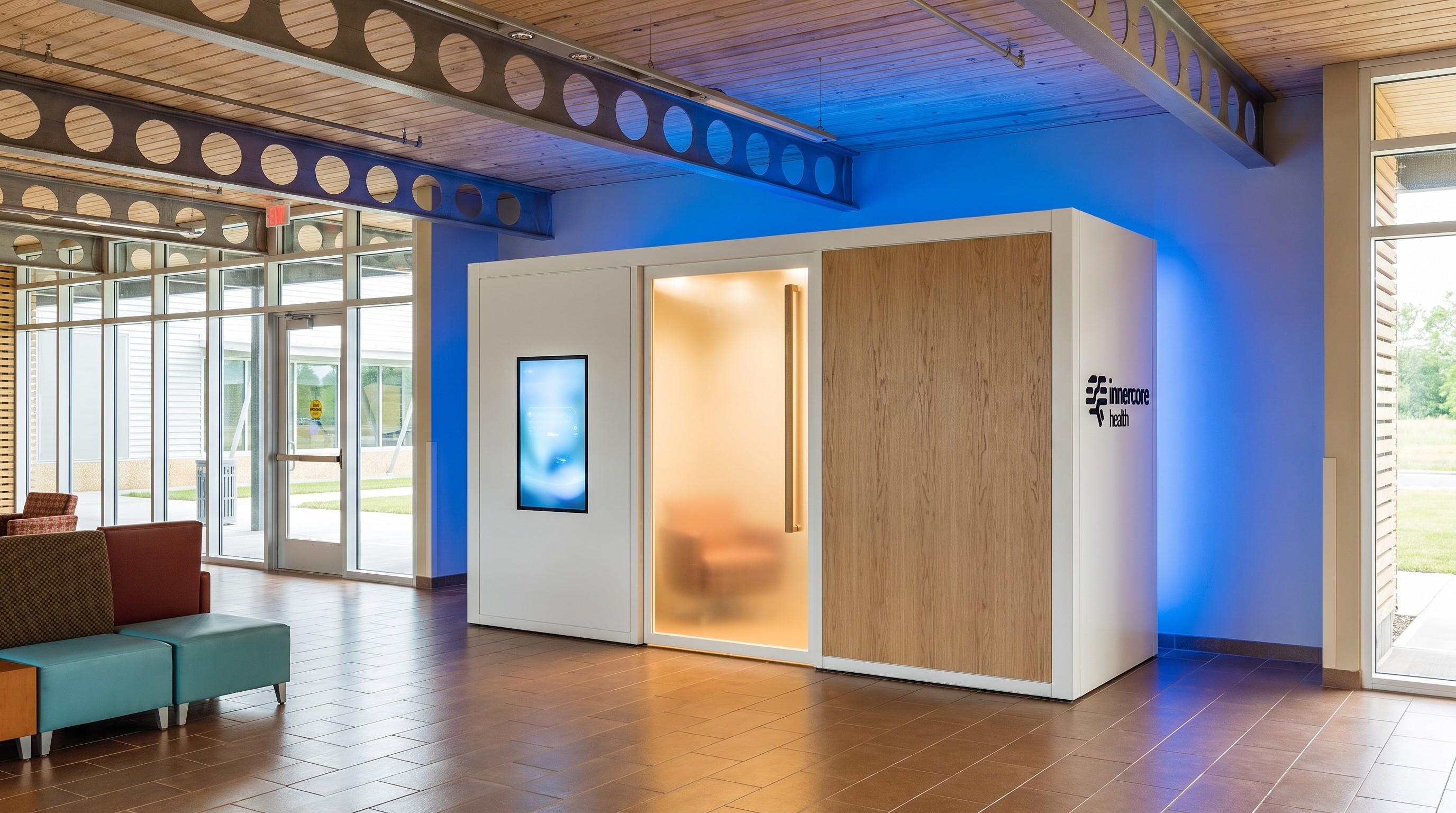
Reclined, private, roughly 40 to 55 minutes. Most people rest or sleep. Nothing shared with a command, a unit, or an employer; the data stays with the individual.
5 or so sessions
A short course, not an open-ended commitment
Typically 5 or so sessions across about 3 weeks, with optional tune-up sessions afterward.
No exposure
No exposure, no requirement to talk through what happened
Unlike therapies built around recounting traumatic material, there's nothing to actively do or revisit. The person rests; the technology does the rest.
The session
Inside a session.
What changes
What changes.
Sleep
Actually sleeping through the night.
Not just getting more hours of interrupted rest.
The present
Reacting to what's actually happening now.
Instead of running on the same alert setting as the last deployment or the last shift.
Control
Measuring a reaction.
Instead of being run by it.
Active duty
For active-duty populations.
Steady focus and predictable energy without the engine running too hot.
Veterans
For veterans.
Finding a working rhythm again after separation, without needing all that leftover readiness to go somewhere.
Common Questions
Are you wondering?
Does this affect a security clearance, fitness-for-duty status, or personnel record?
No. Sessions are private, between Innercore and the individual. This isn't a medical or psychiatric evaluation, and nothing about it is reported to a command, a unit, or a records system.
Is this a form of therapy? Do I have to talk about what happened?
No. There's no requirement to describe, recount, or relive any past event. The technology reads real-time brain activity and reflects it back as sound; the person rests. It can complement therapy or other clinical care, but it isn't a substitute for it and doesn't function like one.
How is this different from what the VA, or a base clinic, already offers?
This isn't positioned to replace VA or clinical care, and it doesn't require leaving it. It's designed to complement existing clinical, behavioral, and wellness support, addressing the regulation underneath sleep, focus, and emotional control directly, alongside whatever care is already in place.
What does this cost, and is it covered?
It depends on the partnership structure. We'll go over cost and coverage in your first conversation.
Is this safe?
Yes. Non-invasive, no medication, no medical procedure. The sensors only listen; nothing is sent into the brain.
What does a session actually feel like?
Most people find it deeply restful. Many rest or sleep through it, similar to a quiet moment in a comfortable chair. Sensors on, earbuds in, nothing to practice or get right.
How long until I notice something?
Many people notice a shift by the second session, within a short, defined course of 5 or so sessions across about 3 weeks, not an open-ended commitment.
Start building readiness back in.
Not a clinical program, and not a substitute for care already in place. A short, private course designed to help service members and veterans actually stand down when the mission, the shift, or the tempo allows it.