













Your body's alarm system, stuck on.
You stand up and your heart rate spikes before you take a step. It's real, it's measurable, and it isn't just anxiety. It's a nervous system that isn't regulating the way it should.

The problem
A regulation problem, not a heart problem.
POTS is a disorder of autonomic cardiovascular regulation, the system responsible for automatically adjusting heart rate and blood vessel tone when you change position. When that regulation is off, ordinary transitions, standing up, a warm room, physical exertion, can trigger the same racing-heart, lightheaded response over and over.
See more about the science
Your autonomic nervous system continuously adjusts heart rate, blood pressure, and vascular tone in response to what your body needs moment to moment, standing up, warming up, moving. When that adjustment doesn't happen correctly, the result isn't a heart problem in the traditional sense, it's a regulation problem, the same underlying system responsible for sleep, stress response, and recovery elsewhere in the body.
How it works
A reflection, not a directive.
Salt and fluid loading manage volume, not regulation. Compression garments manage circulation from the outside. Beta blockers slow the heart rate without addressing what's driving the dysregulation. All reasonable tools, none of them read your actual autonomic activity and respond to it in real time. This does.
A few sensors read your brain's activity in real time and play it back to you as sound, shifting as your brain shifts. There's nothing to do, no exercise, no script. Hearing that accurate reflection gives your brain what it needs to recalibrate the same system that manages heart rate and blood flow.
Non-invasive. No medication, no medical procedure. You rest.
See the mechanism
Reads brain electrical activity through a small number of patented sensors that are more sensitive than EEG sensors in a hospital. Converts dominant frequencies and hemispheric-balance data into audible engineered tones, near-real-time. No electrical, magnetic, or chemical input introduced at any point in the loop.
Not this
What this isn't.
Not a procedure
Not a cardiac procedure.
Nothing invasive, nothing implanted.
Not a pill
Not a medication.
Nothing enters your body.
Not a tip
Not "just drink more water."
This addresses regulation directly, not one input to it.
Not a replacement
Not a substitute for your cardiologist.
This works alongside existing care.
The research
Built on research, not a wellness trend.
Years of research
15+
A 15-year collaboration with the Brain Body Research Program at Wake Forest University School of Medicine.
IRB-overseen studies
14
POTS is directly among the conditions shown to improve.
Sessions in a course
5 or so
Across about 3 weeks. Not an ongoing routine.
Medication
0 mg
Nothing enters your body. No medical procedure. You rest.
Studies conducted through Wake Forest University School of Medicine.

The course
The course, start to finish.
What a session addresses, from the first visit on.
A few minutes
A short assessment, not a new specialist visit
A few sensors, a few minutes.
40-55 minutes
The session
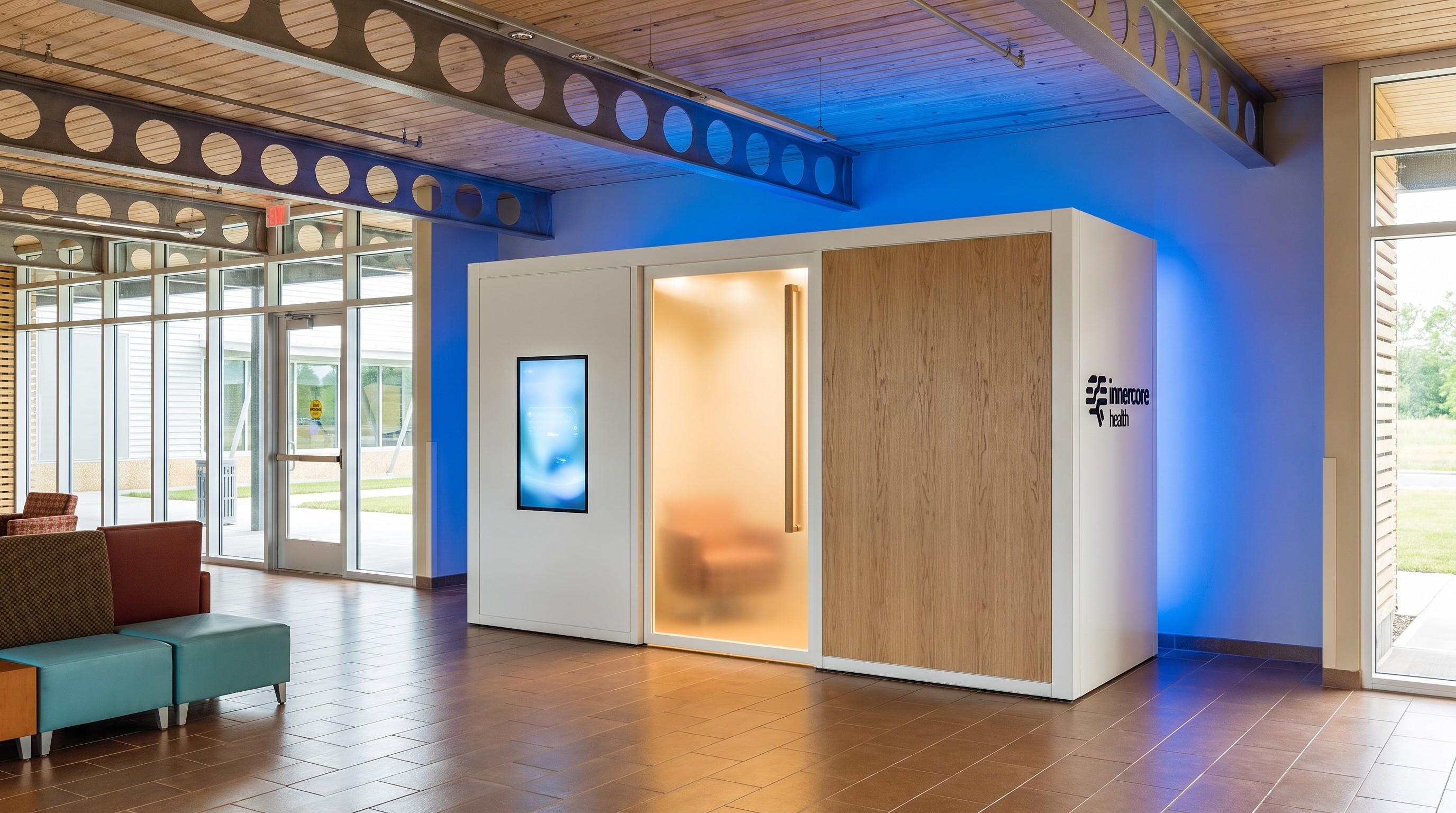
Reclined, private, roughly 40 to 55 minutes. Most people rest or sleep.
5 or so sessions
A short course, not an ongoing medication
Typically 5 or so sessions across about 3 weeks, with optional tune-up sessions afterward.
Alongside your care
Complementary, not a replacement
Designed to sit alongside existing cardiology or autonomic-specialist care, not instead of it.

What changes
A few weeks in. You get up from the couch the way you always used to.
Without the room tilting, without bracing for it. Not a cure, not a promise that it never happens again. Just one more ordinary moment that gets to stay ordinary.
- Standing up without the room tilting, more often than not
- Fewer, less intense episodes of racing heart and lightheadedness
- Better tolerance for heat, exertion, and the everyday triggers that used to guarantee a reaction
- Real, measurable shifts in HRV and autonomic regulation, not just a subjective sense of "doing better"
Beyond one condition
POTS rarely shows up alone.
Who this tends to show up for.

Women & Wellness
Autonomic and hormone-related dysregulation are both named territory for that vertical, and POTS disproportionately affects women, a real overlap worth naming.
Explore

Healthcare Partnerships
POTS is exactly the kind of symptom burden with an unclear specialist pathway that vertical's patient-side framing describes.
Explore
Common Questions
Are you wondering?
A few things people ask before their first session.
Is this a substitute for seeing a cardiologist or autonomic specialist?
No. This is designed to complement existing cardiology or autonomic-specialist care, not replace it. If you're being actively treated or monitored, this works alongside that.
Do I need a formal POTS diagnosis before trying this?
No prior diagnosis is required to start the initial assessment, though if you have one, it's useful context to bring.
How is this different from compression garments or beta blockers?
Both manage the condition from outside the regulatory system, volume or heart rate directly. This reads your own real-time autonomic activity and responds to it, addressing the regulation itself.
Is this safe?
Yes. Non-invasive, no medication, no medical procedure. The sensors only listen; nothing is sent into the brain.
What does a session actually feel like?
Most people find it deeply restful. Many rest or sleep through it, similar to a quiet moment in a comfortable chair. Sensors on, earbuds in, nothing to practice or get right.
How long until I notice something?
Many people notice a shift by the second session, within a short, defined course of 5 or so sessions across about 3 weeks, not an open-ended commitment.
What does this cost, and is it covered by insurance?
Cost depends on the course that's right for you, or for organizations, on the partnership. We'll go over pricing, and whether insurance or a benefit plan can help, in your first conversation.
Start regulating from the inside.
Not a garment, not a medication swap. A short, private course built around what your autonomic system needs to actually recalibrate.