

















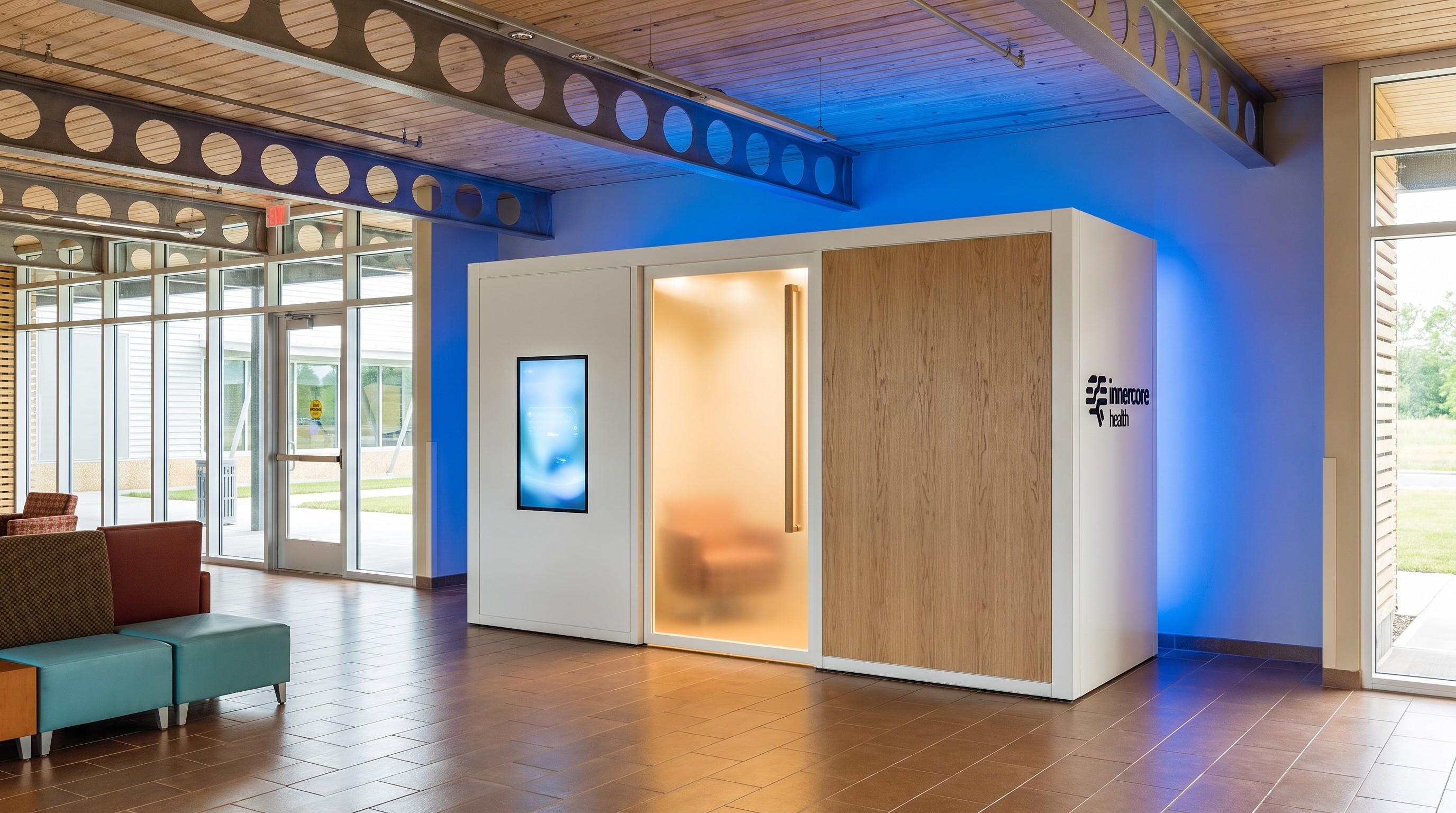

The numbers your doctor watches, and what's actually behind them.
Blood pressure that runs high when nothing's obviously wrong. An HRV score your wearable flags without explaining. Most approaches treat the number, not the system producing it.

The problem
A regulation problem behind the numbers.
Heart rate, blood pressure, and vascular tone are managed by your autonomic nervous system, mostly without your input. When chronic stress or poor sleep wears that system down, the numbers shift too, often before anything is diagnosable.
See more about the science
Your autonomic nervous system continuously adjusts heart rate and vascular tone in response to what your body needs moment to moment. Chronic activation, from stress, poor sleep, or unresolved physiological demand, keeps that system running hotter than it needs to, which shows up directly in cardiovascular markers like resting heart rate, blood pressure, and heart rate variability.
How it works
A reflection, not a directive.

Blood pressure medication manages the number without addressing what drives it. A wearable measures HRV without changing it. Diet and exercise help, slowly. This reads your nervous system's activity and responds to it in real time.
A few sensors read your brain's activity in real time and play it back to you as sound, shifting as your brain shifts. There's nothing to do, no exercise, no script. Hearing that accurate reflection gives your brain what it needs to recalibrate the same system that manages heart rate and blood pressure.
Non-invasive. No medication, no medical procedure. You rest.
See the mechanism
Reads brain electrical activity through a small number of patented sensors that are more sensitive than EEG sensors in a hospital. Converts dominant frequencies and hemispheric-balance data into audible engineered tones, near-real-time. No electrical, magnetic, or chemical input introduced at any point in the loop.
Not this
What this isn't.
Not a pill
Not blood pressure medication.
Nothing enters your body.
Not a tracker
Not a fitness tracker.
This doesn't just measure HRV, it addresses what's producing it.
Not a plan
Not a diet or exercise plan.
Those matter too, this addresses something different.
Not a replacement
Not a substitute for your physician.
This works alongside existing cardiovascular care.
The research
Where the evidence stands.
A specific "shown improvement" claim for blood pressure or HRV outcomes isn't yet part of Innercore's own confirmed conditions list, and this page won't state one until that's independently sourced. The mechanism connecting autonomic regulation to cardiovascular markers is well-established science, not an Innercore-specific claim requiring separate verification.
Years of research
15+
A 15-year collaboration with the Brain Body Research Program at Wake Forest University School of Medicine.
IRB-overseen studies
14
Including work on autonomic cardiovascular regulation broadly.
Sessions in a course
5 or so
Across about 3 weeks. Not an ongoing routine.
Medication
0 mg
Nothing enters your body. No medical procedure. You rest.
Studies conducted through Wake Forest University School of Medicine.

The course
The course, start to finish.
What a session addresses, from the first visit on.
A few minutes
A short assessment
A few sensors, a few minutes.
40-55 minutes
The session
Reclined, private, roughly 40 to 55 minutes.
5 or so sessions
A short course, not an ongoing medication
Typically 5 or so sessions across about 3 weeks, with optional tune-up sessions afterward.
Alongside your care
Complementary, not a replacement
Designed to sit alongside existing cardiovascular care and any medication already in use, not instead of it.

What changes
The wearable's morning HRV number used to be something to brace for.
A few weeks in, it's just a number again, mostly steady, sometimes even good. Nothing dramatic happened. The system underneath it just started running the way it's supposed to.
- Heart rate variability trending in the right direction, not just being tracked
- A resting heart rate that settles lower, without a new medication
- Better tolerance for stress without a cardiovascular spike attached to it
- Real, measurable autonomic shifts, not just a subjective sense of calm
Beyond one condition
Cardiovascular markers rarely stand alone.
Who this tends to show up for.

Healthcare Partnerships
Cardiovascular regulation sits inside that vertical's own patient-side framing of autonomic dysregulation with no clear specialist pathway.
Explore

Brain Health & Wellness
This audience's own already-tried-things profile, wearables, HRV tracking, maps directly onto this condition's entry point.
Explore
Common Questions
Are you wondering?
A few things people ask before their first session.
Is this a substitute for blood pressure medication?
No. This is designed to complement existing cardiovascular care and medication, not replace it. Don't change or stop a prescribed medication without talking to your physician.
Is there real research specifically on blood pressure or HRV outcomes?
Not yet. The autonomic mechanism behind this is well studied, but we don't have blood pressure or HRV results to share, so we don't claim them.
How is this different from what my fitness tracker already tells me?
A tracker measures HRV and heart rate. It doesn't change what's producing those numbers. This reads your real-time autonomic activity and responds to it directly.
Is this safe?
Yes. Non-invasive, no medication, no medical procedure. The sensors only listen; nothing is sent into the brain.
What does a session actually feel like?
Most people find it deeply restful. Many rest or sleep through it, similar to a quiet moment in a comfortable chair. Sensors on, earbuds in, nothing to practice or get right.
How long until I notice something?
Many people notice a shift by the second session, within a short, defined course of 5 or so sessions across about 3 weeks, not an open-ended commitment.
What does this cost, and is it covered by insurance?
Cost depends on the course that's right for you, or for organizations, on the partnership. We'll go over pricing, and whether insurance or a benefit plan can help, in your first conversation.
Start regulating what your wearable only measures.
Not a new medication, not another tracker. A short, private course built around the autonomic system actually running your cardiovascular baseline.