










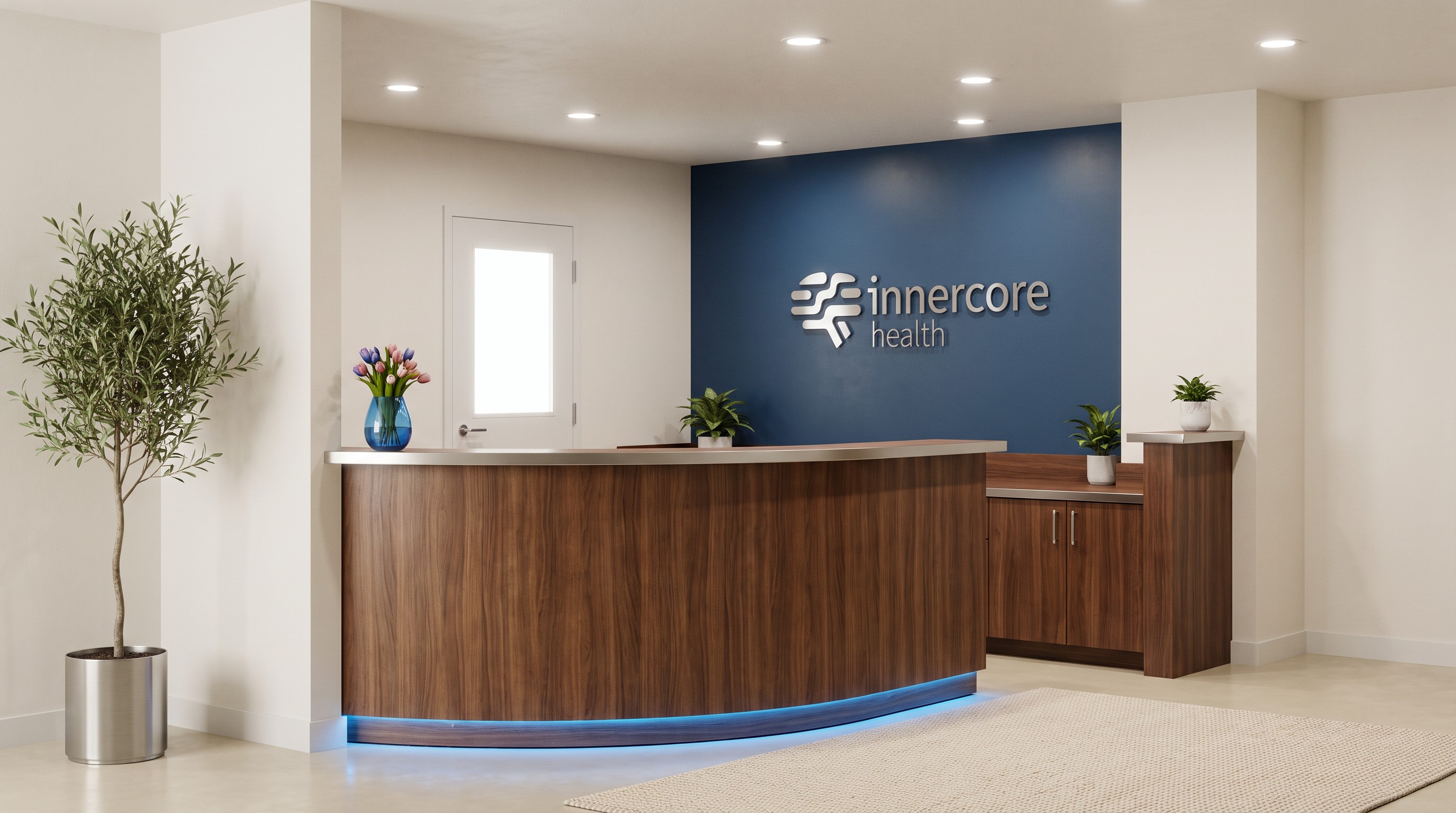
Your brain isn't broken. It's just never given a chance to turn off.
Deadlines, what comes after graduation, and a brain that won't quiet down even when the work is done. Running on fumes starts to feel normal. It isn't supposed to be.
The problem
One overloaded system.
Can't turn your brain off at night. Running on fumes by Wednesday. Spiraling over something that wouldn't have bothered you last semester. Academic burnout that started before the semester even got hard.
These aren't five separate things to fix with five separate fixes. One overloaded system. Five different symptoms wearing its name.
How it works
How it works.
Your nervous system runs on two settings: sympathetic (alert) and parasympathetic (rest and repair). Deadlines and exams keep you in the first, even at 2am when the work is done. Recovery needs the second, and staring at the ceiling doesn't get you there.
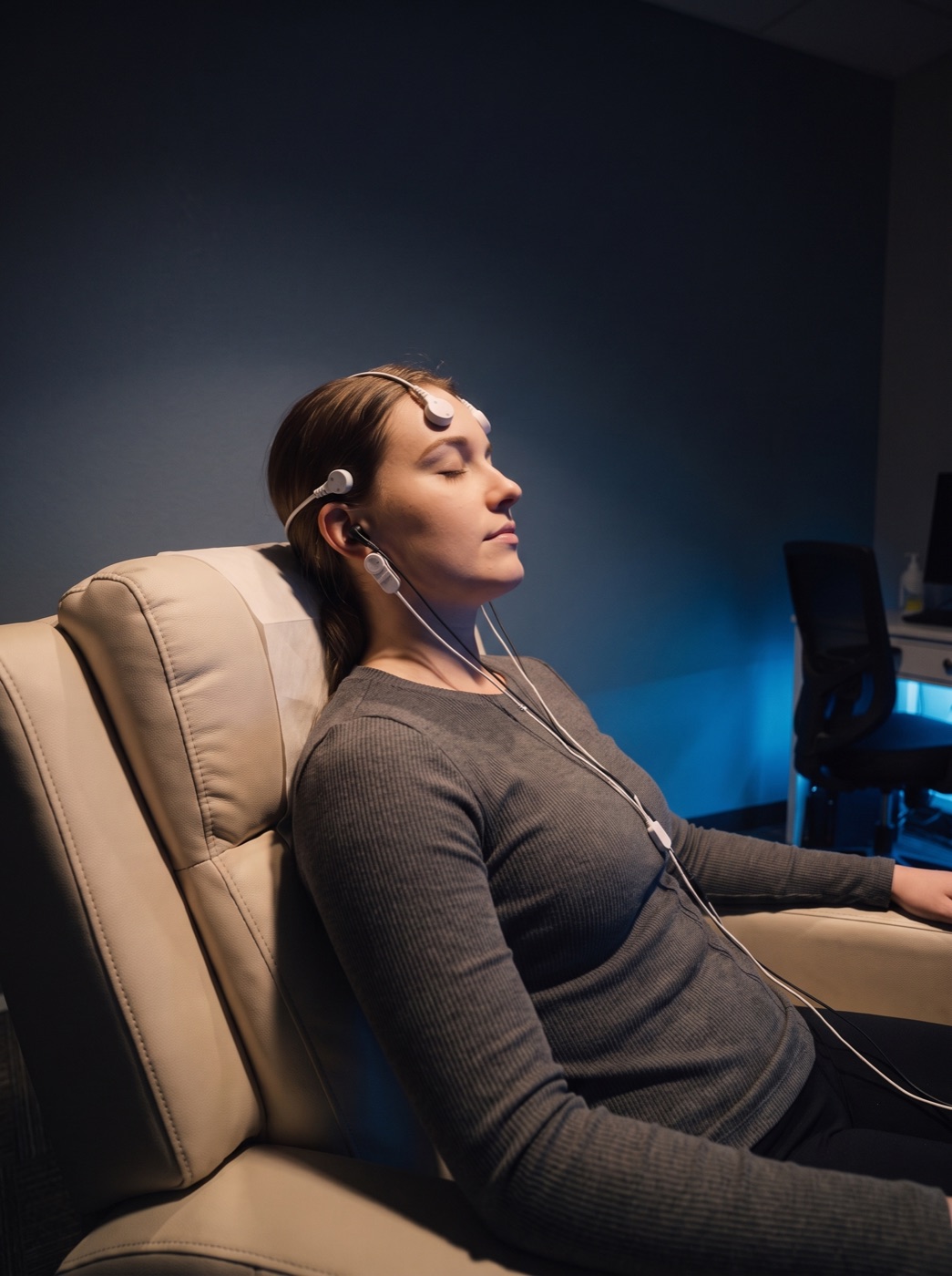
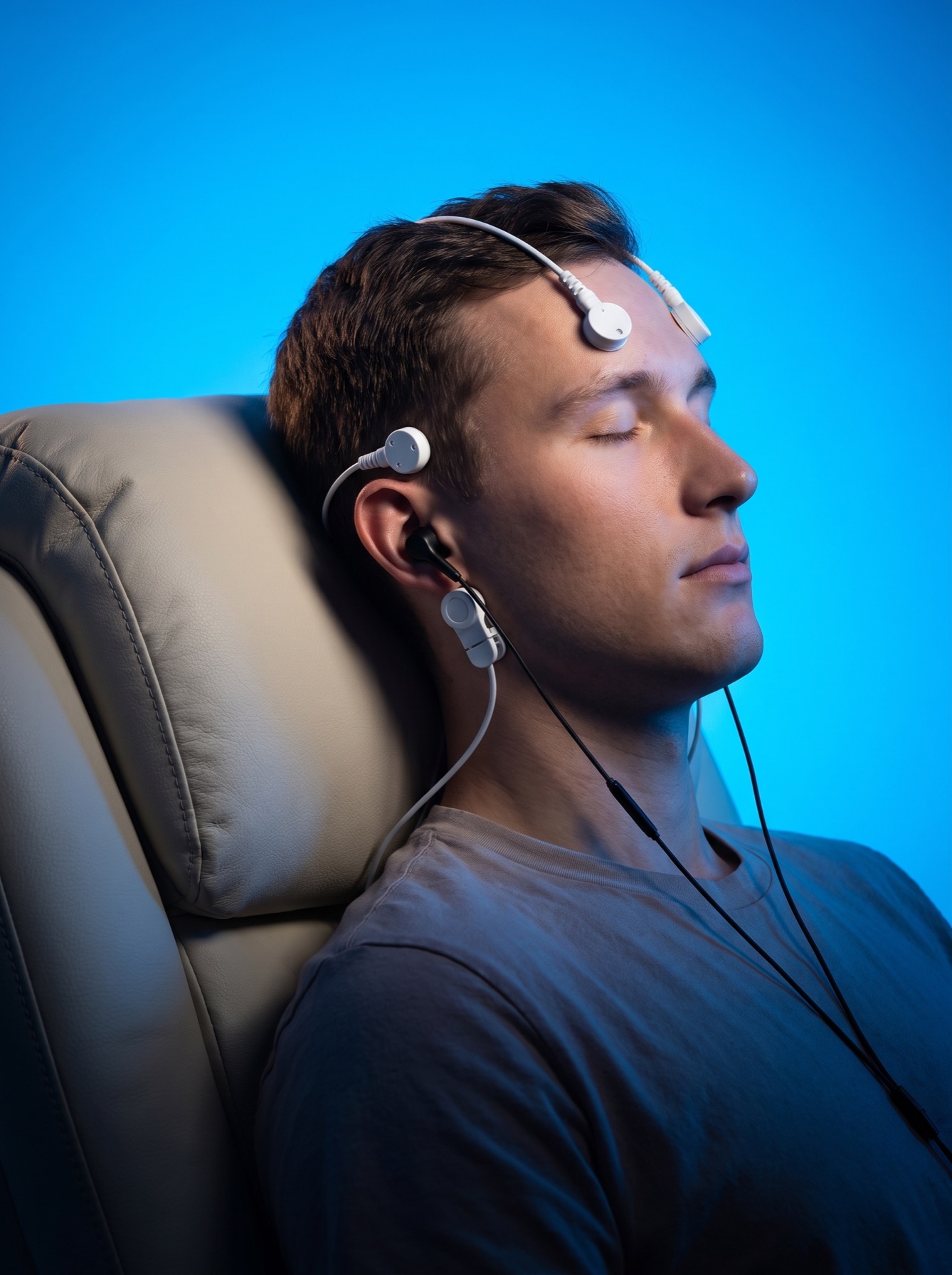
A few sensors read your brain's activity in real time and play it back to you as sound, shifting as your brain shifts. There's nothing to do and no app to remember to open. Hearing that accurate reflection gives your brain what it needs to recalibrate itself.
Non-invasive. No medication, no medical procedure. You rest.
See the mechanism
Reads brain electrical activity through a small number of patented sensors that are more sensitive than EEG sensors in a hospital. Converts dominant frequencies and hemispheric-balance data into audible engineered tones, near-real-time. No electrical, magnetic, or chemical input introduced at any point in the loop.
See more about the science
Your autonomic nervous system continuously adjusts your body's internal state, deciding when to mobilize for a demand and when it's safe to shift toward rest and repair. Academic deadlines and constant connectivity keep that system mobilized well past the point it's actually needed, which is why staring at the ceiling after the work is done doesn't reliably lead to sleep. Your brain does this recalibration from the inside out, on its own terms, not on a fixed schedule someone else sets for it.
Your calendar
Scheduled around your actual calendar.
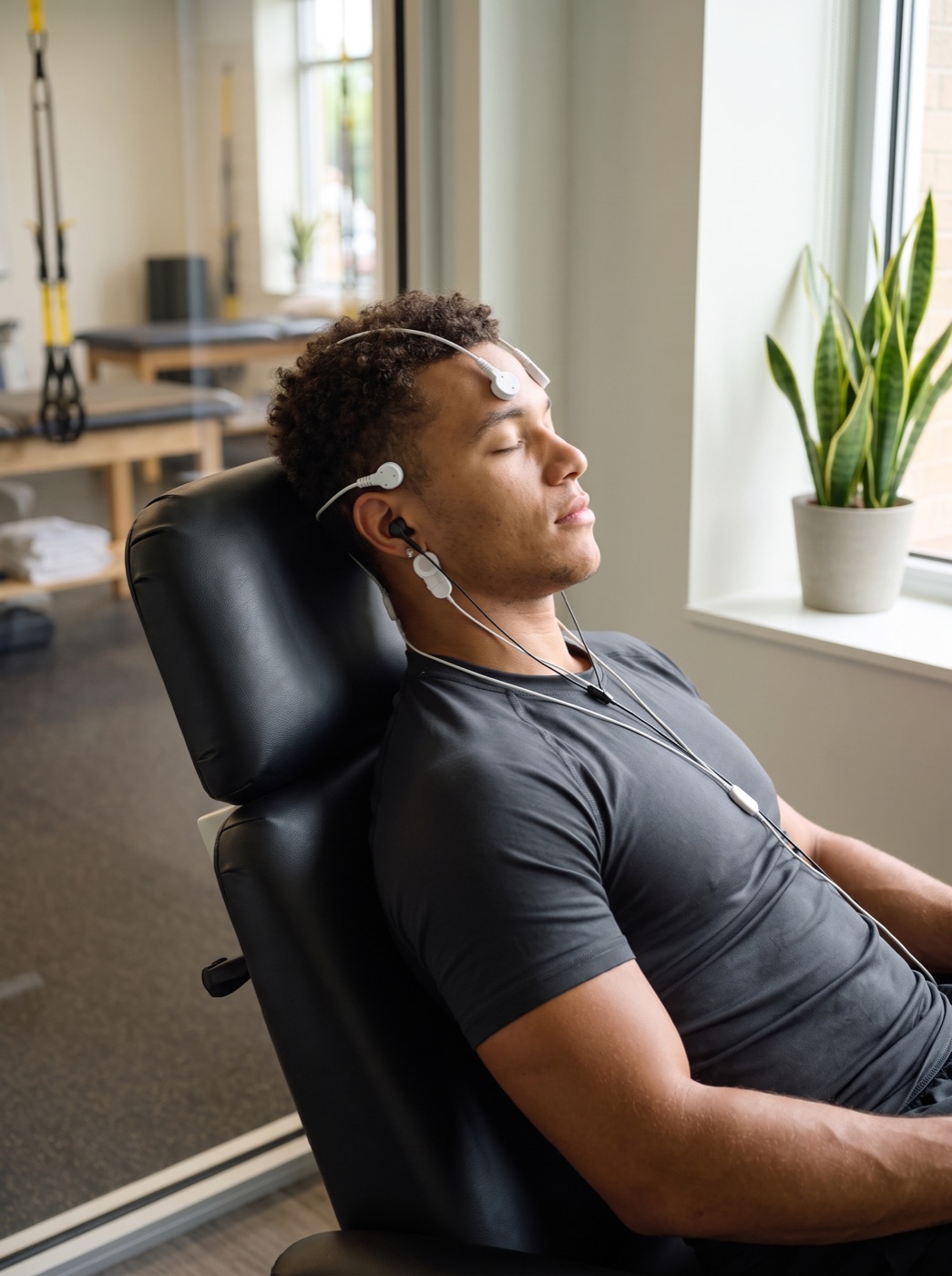
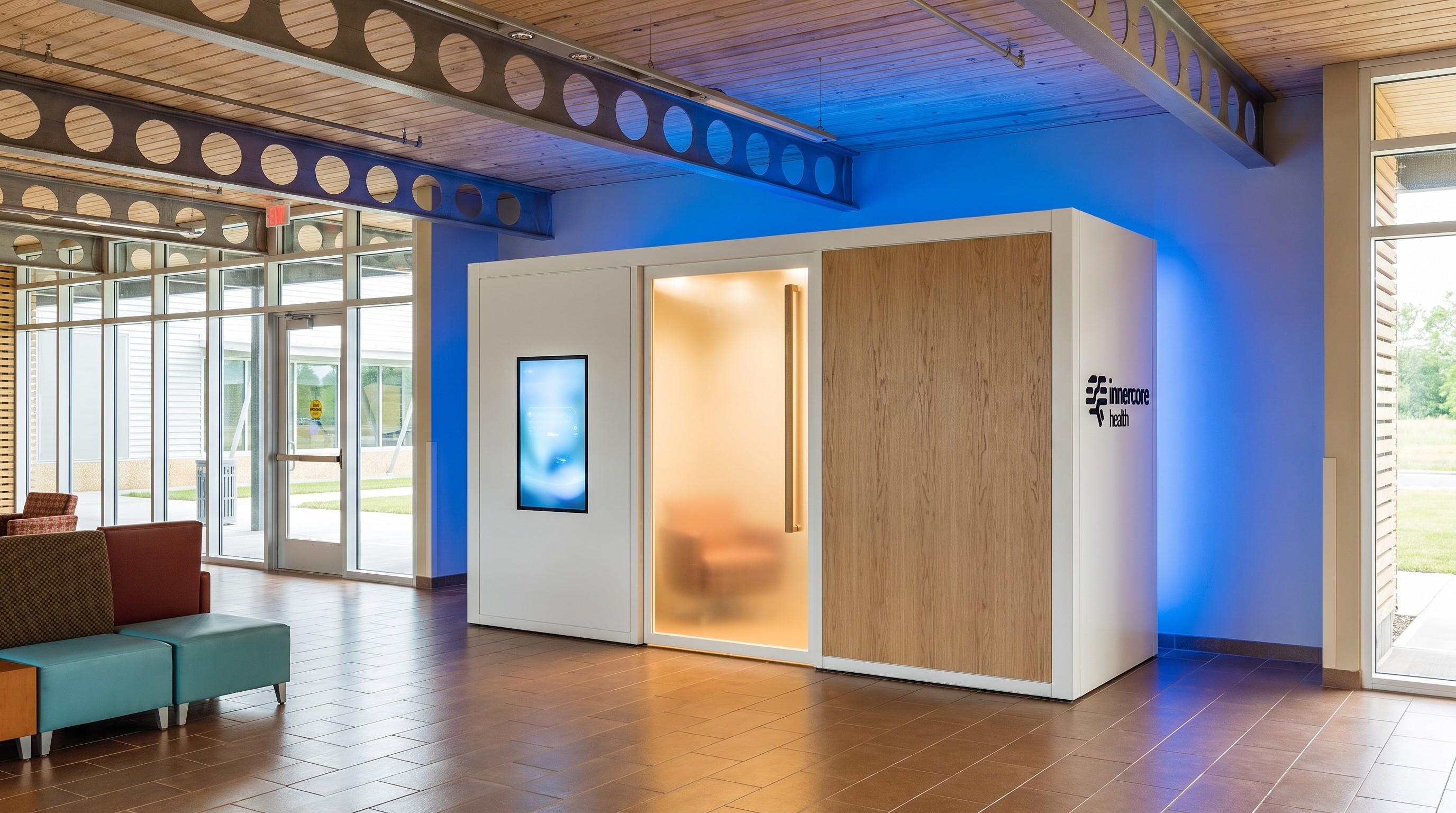
A short assessment, not an intake to prep for: a few sensors, a few minutes. Each session is private, about 40 to 55 minutes, and most people rest or sleep. It's a short course, typically five sessions over about three weeks, scheduled around classes and exams.
The research
Backed by real research, not just a wellness trend.
Years of research
15+
A 15-year collaboration with the Brain Body Research Program at Wake Forest University School of Medicine.
IRB-overseen studies
14
This isn't a stress ball with a research citation attached to it.
Sessions in a course
5 or so
Across about 3 weeks. Not an ongoing routine.
Medication
0 mg
Nothing enters your body. No medical procedure. You rest.
Studies conducted through Wake Forest University School of Medicine.

The course
The course, start to finish.
What a session addresses, from the first visit on.
The Assessment
A short assessment, not an intake you have to prep for.
A few sensors, a few minutes.
The Session
The session.
Private, roughly 40 to 55 minutes. Most people rest or sleep, no test to study for, nothing to perform.
The Course
A short course, not a semester-long commitment.
Typically 5 or so sessions across about 3 weeks, scheduled around your actual class and exam schedule, not instead of it.
The session
Inside a session.
What changes
What changes.
Session two. By twenty minutes in you're not thinking about the tone anymore. That night, asleep faster than you expected. Exams are still exams, but there's a version of you taking them who isn't running on fumes.
Feeling like a person again
not just managing until the next deadline
A brain that's finally quiet enough
to actually fall asleep
Catching up on real sleep
not just more hours in bed
Focusing without forcing it
even the week everything's due at once
Beyond one condition
Academic pressure rarely shows up alone.
Who this tends to show up for.
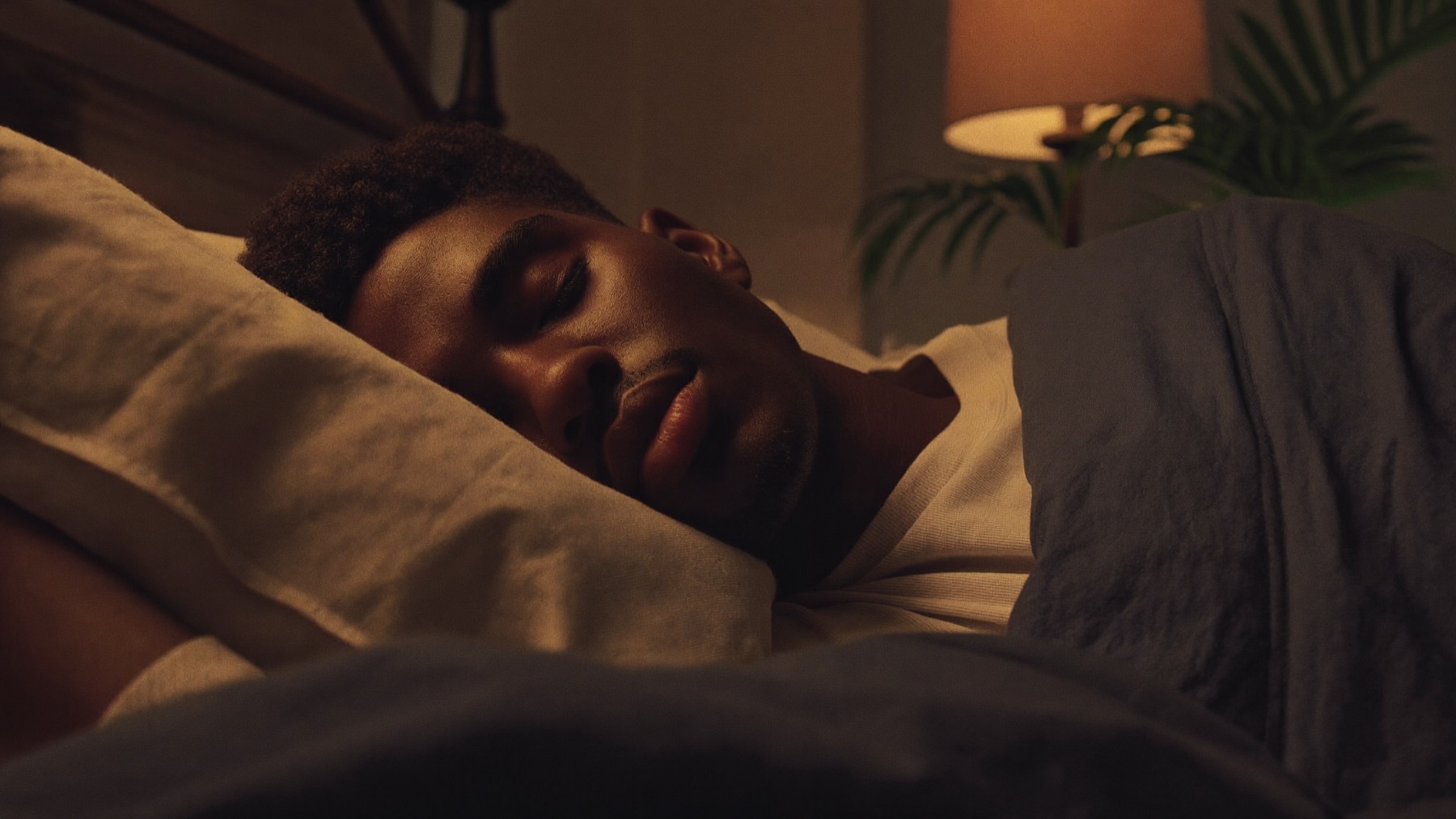
Sleep
"Can't turn my brain off at night" is this vertical's own top symptom phrase.
Explore

Chronic Stress
Academic burnout that started before the semester even got hard is a stress-load problem before it's anything else.
Explore
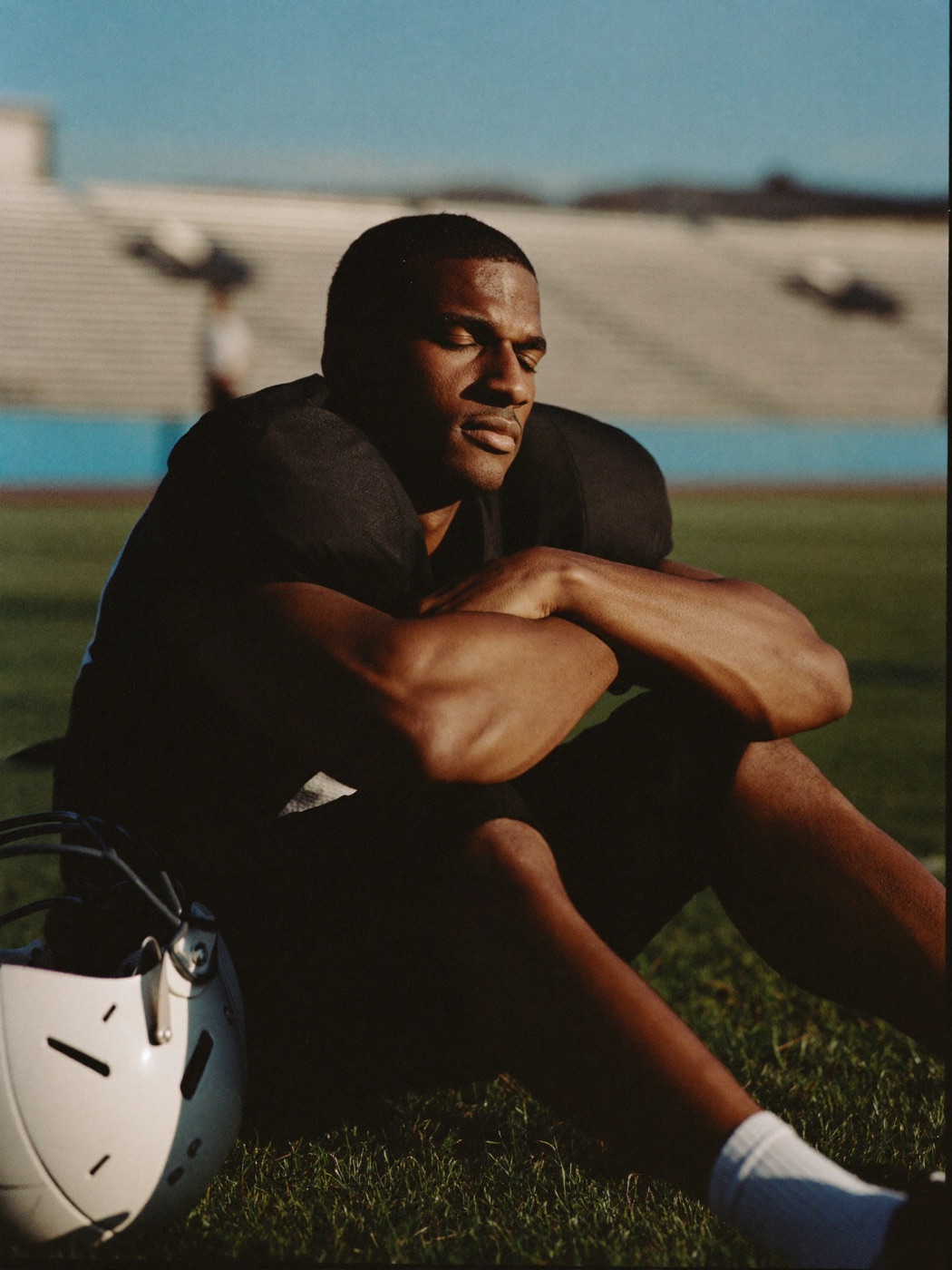
Competitive Athletics
For student-athletes carrying both academic and athletic performance pressure, the same nervous system is asked to recover from both.
Explore
Common Questions
Are you wondering?
A few things people ask before their first session.
What does this cost, and is it covered by student fees, insurance, or a campus partnership?
Cost depends on the course that's right for you and on any campus partnership. We'll go over pricing, and whether insurance or your school can help, in your first conversation.
I already don't have enough hours in the day. How is this not one more thing?
A short assessment, then 5 or so sessions of about 40 to 55 minutes each, scheduled around your actual class and exam calendar. Not months of appointments, not a new daily habit to maintain.
Is this just another campus wellness thing, or does it actually do something?
This isn't a stress ball or a guided breathing app. It reads your own real-time brain activity and responds to it directly, backed by 15+ years of research and 14 IRB-overseen studies, not a wellness trend.
Is this safe?
Yes. Non-invasive, no medication, no medical procedure. The sensors only listen; nothing is sent into the brain.
What does a session actually feel like?
Most people find it deeply restful. Many rest or sleep through it, similar to a quiet moment in a comfortable chair. Sensors on, earbuds in, nothing to practice or get right.
How long until I notice something?
Many people notice a shift by the second session, within a short, defined course of 5 or so sessions across about 3 weeks, not an open-ended commitment.
Start getting your brain back.
Not a study hack, and not one more wellness event to sit through. A short, private course built around what your nervous system actually needs to quiet down.