



















The alarm that keeps ringing after the all-clear.
When your nervous system stays on high alert, it's hard to quiet your thoughts or relax, even with no clear reason to feel anxious. The sessions support your brain's own ability to settle.

How it works
How it works.

Your nervous system runs on two settings: sympathetic (alert, ready, on) and parasympathetic (rest, recover, repair).
A few sensors read your brain's activity in real time and play it back to you as sound, shifting as your brain shifts. There's nothing to do, no exercise, no script. Hearing that accurate reflection gives your brain what it needs to recalibrate itself.
Non-invasive. No medication, no medical procedure. You rest.
See the mechanism
Reads brain electrical activity through a small number of patented sensors that are more sensitive than EEG sensors in a hospital. Converts dominant frequencies and hemispheric-balance data into audible engineered tones, near-real-time. No electrical, magnetic, or chemical input introduced at any point in the loop.
The research
Built on research, not a wellness trend.
Years of research
15+
A 15-year collaboration with the Brain Body Research Program at Wake Forest University School of Medicine.
IRB-overseen studies
14
Populations studied include civilians, active-duty military, emergency responders, and healthcare workers.
Sessions in a course
5 or so
Across about 3 weeks. Not an ongoing routine.
Medication
0 mg
Nothing enters your body. No medical procedure. You rest.
Studies conducted through Wake Forest University School of Medicine.

The course
The course, start to finish.
A few minutes
A short assessment, done for you, not by you
A few sensors, a few minutes.
40-55 minutes
The session
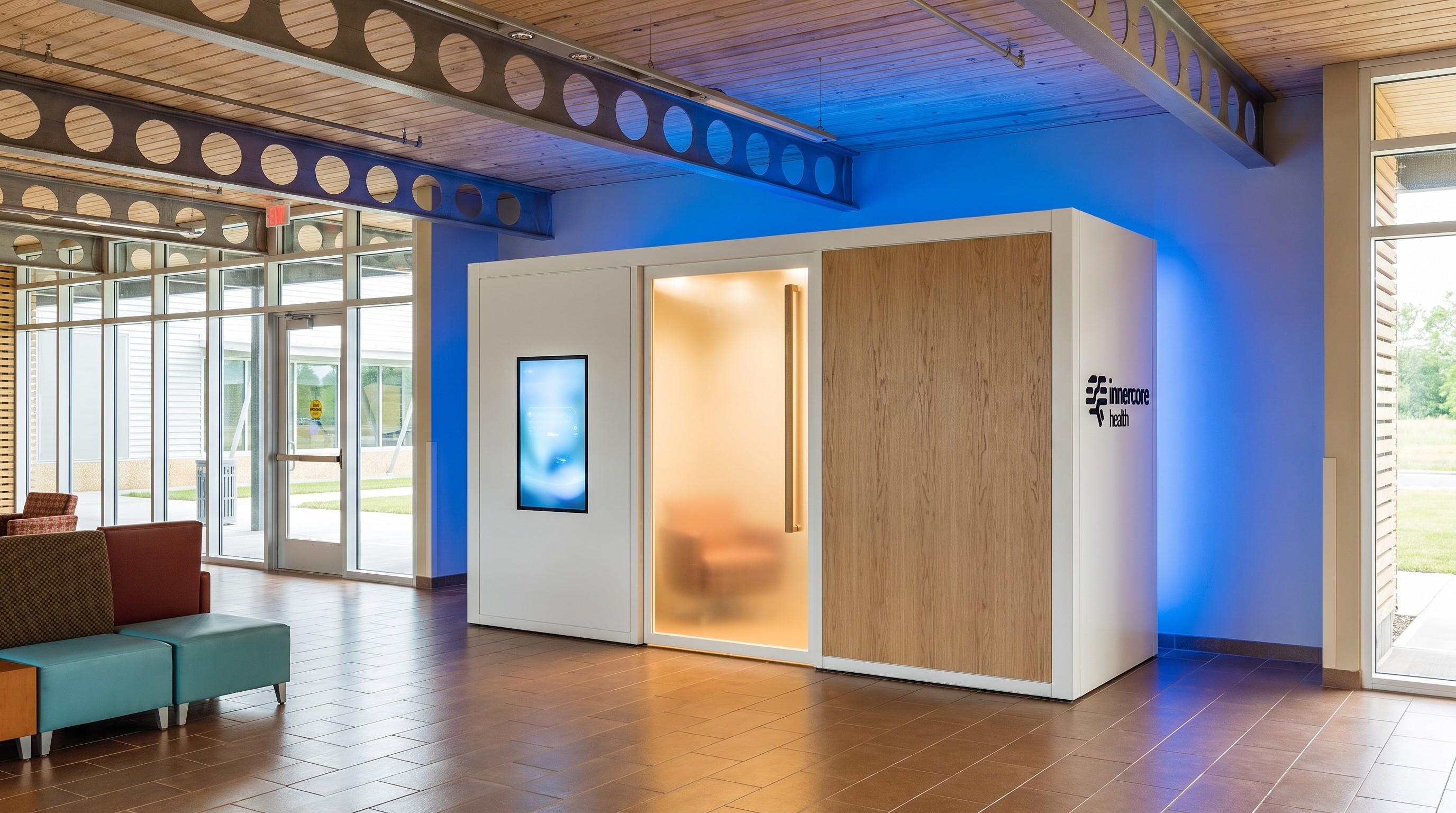
A comfortable reclined setup, roughly 40 to 55 minutes. Most people rest or sleep. Nothing to practice, focus on, or get right.
5 or so sessions
A short course, not a new daily habit
Typically 5 or so sessions across about 3 weeks. No app to open every morning, no streak to maintain.
Common Questions
Are you wondering?
A few things people ask before their first session.
Is this safe?
Yes. Non-invasive, no medication, no medical procedure. The sensors only listen; nothing is sent into the brain.
What does a session actually feel like?
Most people find it deeply restful. Many rest or sleep through it, similar to a quiet moment in a comfortable chair. Sensors on, earbuds in, nothing to practice or get right.
How long until I notice something?
Many people notice a shift by the second session, within a short, defined course of 5 or so sessions across about 3 weeks, not an open-ended commitment.
What does this cost, and is it covered by insurance?
Cost depends on the course that's right for you, or for organizations, on the partnership. We'll go over pricing, and whether insurance or a benefit plan can help, in your first conversation.
Begin with one conversation.
Request more information or schedule an initial assessment. We are happy to answer your questions.